
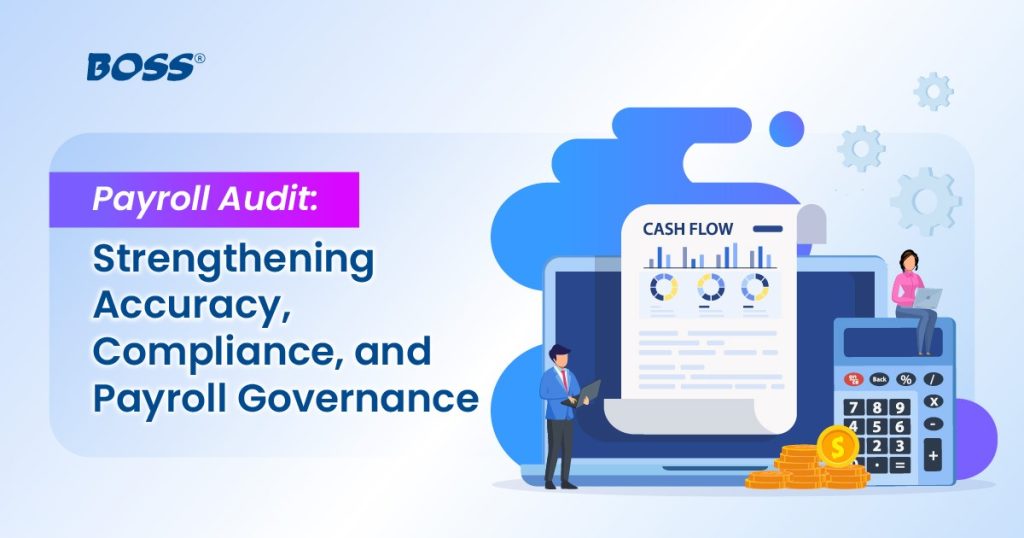
A payroll audit is a structured and systematic review of an organization’s payroll processes, records, and compliance frameworks. Its primary objective is to ensure employees are compensated accurately, statutory obligations are fulfilled, and internal controls are operating effectively. From a professional HR and finance perspective, a payroll audit extends beyond financial verification—it functions as a governance mechanism that safeguards both organizational integrity and employee trust.
What is a Payroll Audit?
A payroll audit refers to the comprehensive examination of payroll data, processes, and supporting documentation to validate accuracy, legitimacy, and compliance with applicable regulations. This process assesses whether salaries, overtime, deductions, tax contributions, and statutory payments are correctly computed, appropriately authorized, and accurately recorded.
In practice, a payroll audit seeks to address a fundamental question:
Are employees being compensated accurately, consistently, and in full compliance with legal and contractual obligations?
Why Payroll Audit is Important?
Payroll represents one of the most significant operational expenditures for most organizations. As such, even minor discrepancies can result in financial losses, employee dissatisfaction, or regulatory non-compliance.
A payroll audit enables organizations to assess and strengthen key areas such as:
- Whether salary calculations are aligned with employment contracts
- Whether statutory contributions are accurately computed and submitted on time
- Whether any duplicate or non-existent (“ghost”) employees exist in the payroll system
- Whether overtime, allowances, and claims are properly approved and documented
From a governance standpoint, it reinforces transparency, financial accuracy, and regulatory compliance across the payroll function.
Who Conducts a Payroll Audit?
Payroll audits are typically carried out by one or more of the following parties:
- Internal HR or finance teams as part of internal audit processes
- External auditors or independent accounting firms for objective assessment
- Compliance or regulatory officers in highly regulated industries
In more mature governance structures, organizations often adopt a hybrid approach, combining internal monitoring with external validation to enhance reliability and objectivity.
When Should a Payroll Audit Be Conducted?
The timing of a payroll audit depends on organizational risk level, operational complexity, and regulatory requirements. Common practice includes:
- Annually, as part of year-end financial reporting
- Quarterly, for large or high-risk organizations
- During HR or payroll system migrations and digital transformation initiatives
- Following payroll discrepancies, employee complaints, or compliance concerns
Conducting audits at regular intervals helps organizations identify and address issues proactively before they escalate into compliance or financial risks.
Where Does a Payroll Audit Focus?
A payroll audit typically reviews the full payroll lifecycle, including:
- Employee master data (job roles, salary structures, employment status)
- Time and attendance records (working hours, overtime, leave balances)
- Payroll computations (basic salary, allowances, and deductions)
- Statutory contributions and tax compliance obligations
- Approval workflows and authorization controls
- Payment processing and bank transfer records
Each component is assessed to ensure payroll accuracy, consistency, and proper control mechanisms.
How is a Payroll Audit Conducted?
A payroll audit follows a structured and methodical approach.
Initially, auditors collect relevant payroll documentation, including payslips, employment contracts, attendance records, and statutory filings. These records are then cross-referenced to verify consistency and completeness.
Subsequently, payroll calculations are reviewed to ensure compliance with internal policies and statutory requirements. Any discrepancies—such as duplicate payments, missing contributions, or incorrect calculation rates—are identified and flagged for further investigation.
Finally, audit findings are compiled into a formal report outlining identified risks, control weaknesses, and recommendations for corrective action and process improvement.
Common Payroll Audit Findings
In practice, payroll audits frequently reveal recurring issues such as:
- Misclassification of employees (e.g., contract versus permanent staff)
- Errors in overtime or allowance calculations
- Missing, delayed, or inaccurate statutory contributions
- Duplicate payments or continued payroll processing for inactive employees
- Weak or inconsistent approval controls for payroll adjustments
These issues are often attributed to manual processes, fragmented systems, or insufficient process governance.
The Shift Toward Payroll Automation
Modern organizations are increasingly adopting integrated HR and payroll systems to improve efficiency and compliance.
Automation plays a critical role in:
- Reducing manual calculation errors
- Enhancing data accuracy and consistency
- Strengthening audit trails and traceability
- Improving compliance monitoring and reporting efficiency
With centralized and automated payroll systems, audits become more efficient, transparent, and reliable, enabling HR and finance teams to focus on strategic workforce management rather than repetitive validation tasks.
A payroll audit is not merely a compliance requirement—it is a fundamental component of effective payroll governance. When executed properly, it enhances accuracy, strengthens accountability, and builds trust across the organization.
By establishing a robust audit framework and continuously improving payroll processes, organizations can ensure long-term financial integrity and workforce confidence.