What is Recruitment?
Recruitment is the process of identifying, attracting, evaluating, selecting, hiring, and onboarding qualified candidates for an organization. As one of the most important functions of Human Resource Management (HRM), recruitment helps businesses build a skilled workforce that supports long-term growth.
A typical recruitment process includes:
- Identifying hiring needs
- Creating job descriptions
- Advertising vacancies
- Screening applications
- Interviewing candidates
- Selecting the best-fit talent
- Extending job offers
- On-boarding new employees
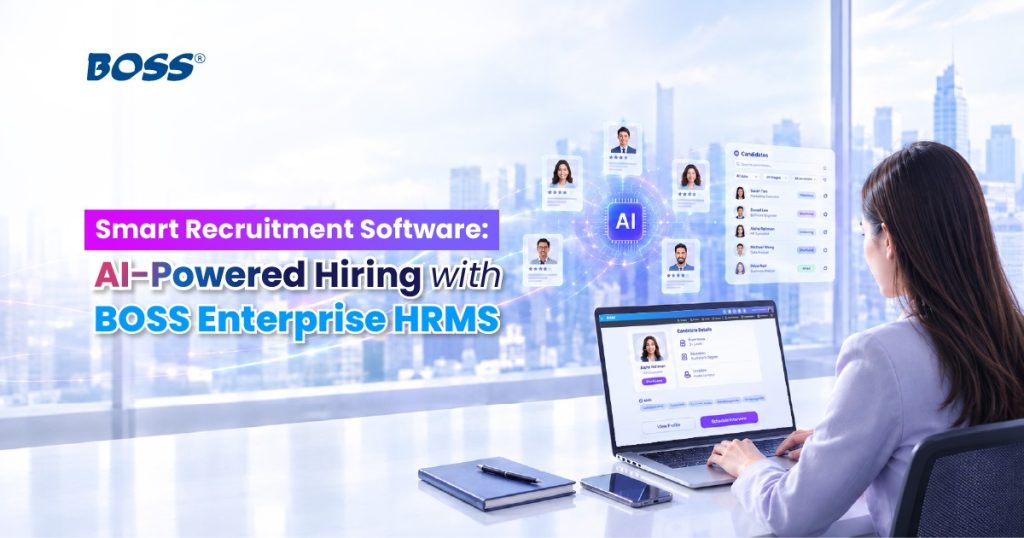
Today, many organizations are replacing manual recruitment processes with AI-powered recruitment software to improve hiring speed, candidate quality, and overall efficiency.
Why is Recruitment Important?
Recruitment directly impacts employee performance, business productivity, and organizational success. An effective recruitment strategy helps organizations:
- Hire qualified candidates faster
- Reduce time-to-hire
- Lower recruitment costs
- Improve candidate experience
- Increase employee retention
- Build stronger talent pipelines
- Support workforce planning
As competition for skilled talent continues to grow, companies are increasingly adopting AI-powered HR software to gain a competitive advantage in recruitment.
What is Recruitment in Human Resource Management (HRM)?
Recruitment is the first stage of the employee lifecycle within Human Resource Management (HRM). HR professionals work closely with hiring managers to identify staffing needs and recruit candidates who possess the right skills, experience, and cultural fit. Modern HR teams now rely on Recruitment Management Systems (RMS) integrated with Enterprise HRMS platforms to automate hiring workflows, improve collaboration, and make data-driven hiring decisions.
What are the Steps in the Recruitment Process?
Most organizations follow a structured recruitment process consisting of:
- Identify hiring requirements
- Develop a recruitment strategy
- Create a job description
- Publish job advertisements
- Source candidates
- Screen resumes
- Conduct initial interviews
- Assess candidates
- Perform background and reference checks
- Select the best candidate
- Extend the job offer
- Hire and onboard
Automating these recruitment stages reduces manual work while improving hiring accuracy and consistency.
How AI is Transforming Recruitment
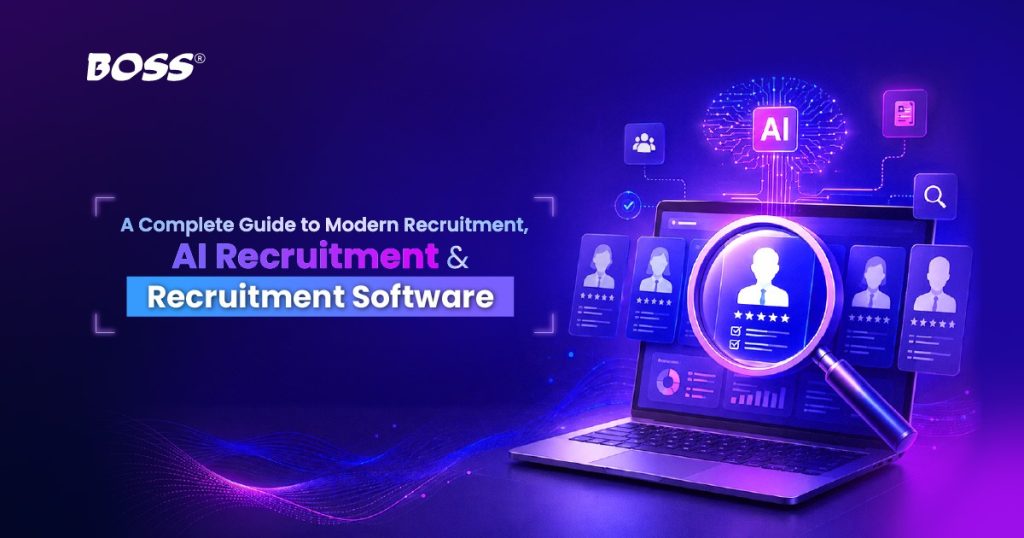
Artificial Intelligence (AI) is revolutionizing recruitment by automating repetitive hiring tasks and enabling recruiters to make smarter decisions. Instead of manually reviewing hundreds of resumes, AI recruitment software can:
- Screen resumes automatically
- Match candidates with job requirements
- Rank applicants based on qualifications
- Schedule interviews
- Engage candidates through AI chatbots
- Build searchable talent pools
- Generate recruitment analytics
- Reduce administrative workload
This allows HR professionals to spend more time engaging with qualified candidates and less time on repetitive administrative work.
How BOSS Enterprise HRMS Simplifies Recruitment
Recruitment can often feel like finding a needle in a haystack, especially when hundreds of candidates apply for a single vacancy. BOSS Enterprise HRMS Recruitment Management helps organizations streamline the hiring process through intelligent automation, customizable workflows, and AI-powered candidate matching. Designed for medium to large enterprises, the solution enables HR teams to recruit more efficiently while improving hiring quality and candidate experience.
Key Recruitment Features in BOSS Enterprise HRMS
1. Custom Recruitment Workflows
Every organization has its own hiring process. BOSS Enterprise HRMS allows HR teams to configure recruitment workflows that align with internal approval processes, interview stages, and hiring policies. This flexibility ensures a standardized yet customizable recruitment experience across departments.
2. Multi-Platform Job Posting
Create job vacancies once and publish them across multiple recruitment channels. The integrated career portal showcases your employer brand while making it easy for candidates to search and apply for available positions.
Benefits include:
- Unlimited job postings
- Faster job advertising
- Improved employer branding
- Better candidate experience
3. Centralized Candidate Profile Management
Manage every applicant in one centralized database. HR teams can easily search, filter, and retrieve candidate information including:
- Resumes
- Contact information
- Employment history
- Interview records
- Assessment results
This prevents valuable candidates from being overlooked and creates a reusable talent pool for future hiring.
4. Comprehensive Hiring Pipeline
Monitor every recruitment stage from application to onboarding. HR managers gain complete visibility into:
- Application status
- Interview scheduling
- Hiring progress
- Candidate feedback
- Recruitment bottlenecks
A centralized hiring pipeline improves collaboration between HR teams and hiring managers while reducing recruitment delays.
5. AI Talent Matching
Match the Right Candidate to the Right Job. One of the most time-consuming recruitment tasks is identifying the most suitable candidates. BOSS Enterprise HRMS leverages AI Talent Matching to automatically compare candidate profiles against job requirements based on:
- Skills
- Working experience
- Qualifications
- Job competencies
Instead of manually reviewing every resume, HR professionals receive intelligent recommendations that highlight the strongest candidates.
Benefits of AI Talent Matching:
- Match the right people to the right roles
- Hire based on data instead of guesswork
- Improve hiring quality
- Reduce recruitment costs
- Shorten hiring time
- Increase recruiter productivity
By combining AI with human decision-making, organizations can build stronger, higher-performing teams.
6. Automated Resume Screening
Screen hundreds or even thousands of resumes within minutes. BOSS Enterprise HRMS automatically filters candidates using customizable criteria such as:
- Education level
- Skills
- Certifications
- Years of experience
- Job requirements
Recruiters spend less time reviewing unsuitable applications and more time engaging top candidates.
7. Interview Scheduling with Calendar Integration
Scheduling interviews becomes simple through integrated calendar functionality. HR managers can coordinate interview sessions with candidates and interview panels while reducing scheduling conflicts and administrative effort.
8. Candidate Assessment & Scorecards
Evaluate candidates consistently using customizable assessment forms and interview scorecards. Standardized evaluations help eliminate bias while ensuring hiring decisions are based on measurable criteria.
9. Better Candidate Experience
Candidate experience plays an important role in employer branding. BOSS Enterprise HRMS provides applicants with a modern recruitment portal and keeps them informed throughout the recruitment journey through timely communication and structured workflows. A positive recruitment experience increases candidate engagement and strengthens your organization’s reputation.
10. Recruitment Dashboard & Analytics
Make recruitment decisions using real-time insights. Interactive dashboards provide visibility into:
- Time-to-hire
- Recruitment sources
- Hiring success rates
- Candidate pipeline
- Recruitment trends
- HR performance metrics
These insights help organizations continuously optimize their recruitment strategies.
Why Organizations Choose BOSS AI-Powered Recruitment System
Organizations are increasingly adopting AI-powered recruitment solutions because they help:
- Reduce manual HR workload
- Accelerate recruitment processes
- Improve hiring quality
- Enhance collaboration
- Deliver better candidate experiences
- Make data-driven hiring decisions
- Build long-term talent pipelines
Integrated with the complete BOSS Enterprise HRMS ecosystem, the Recruitment Module seamlessly connects hiring, onboarding, employee records, payroll, leave, attendance, and workforce management—creating a unified HR experience from recruitment through retirement.