For decades, human resources was largely defined by administration: maintaining employee records, processing payroll, tracking attendance, managing leave and ensuring compliance. As organisations expanded, these responsibilities became increasingly complex, often leaving HR teams dependent on spreadsheets, emails and manual processes.
Today, that model is changing.
The emergence of AI-driven HR software is reshaping how organisations manage their people, moving HR technology beyond basic administration towards automation, workforce intelligence and data-informed decision-making.
In Malaysia, where businesses operate within a distinctive regulatory and workforce environment, this transformation is particularly relevant. Organisations are increasingly looking for HR technology that can combine comprehensive functionality with local compliance, scalability, security and intelligent automation.
Against this backdrop, BOSS Enterprise HRMS represents one example of how an established Malaysian HR technology provider is evolving its platform to meet the changing demands of modern workforce management.
From HR Administration to Workforce Intelligence
The traditional HR function has always involved a significant administrative workload. Payroll calculations, attendance records, leave applications, claims, employee documentation and reporting all require accuracy and consistency.
As organisations grow, however, these processes become increasingly difficult to manage manually.
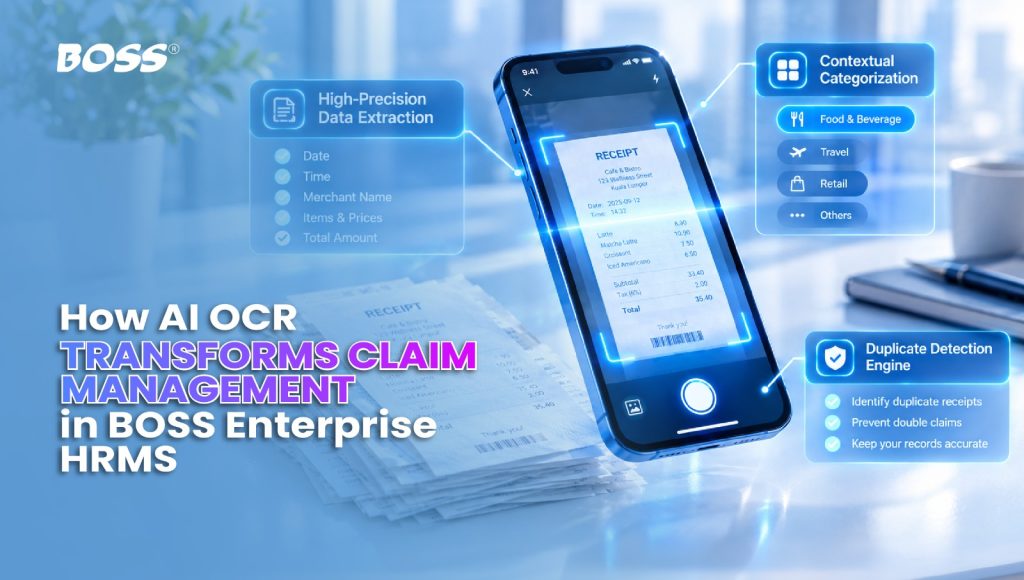
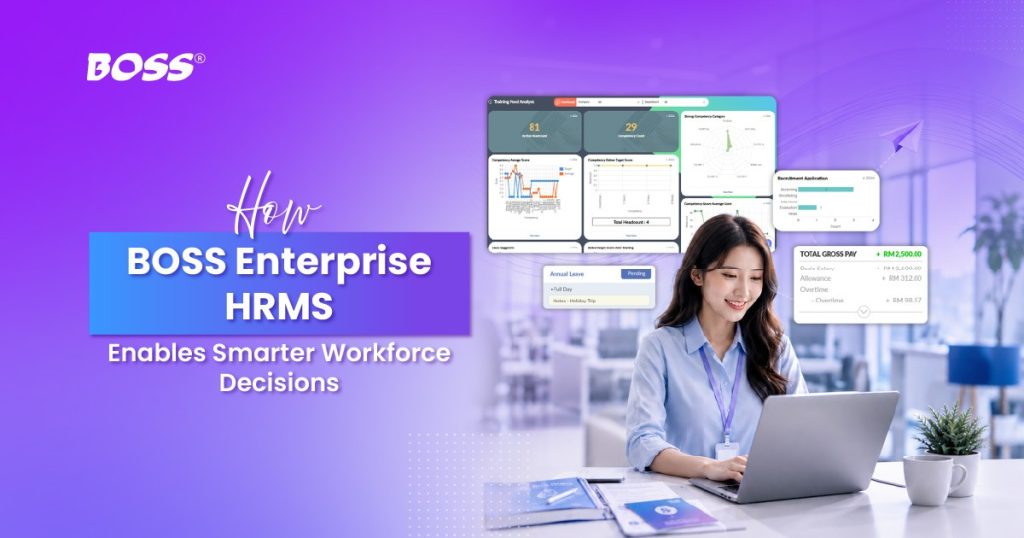
BOSS Enterprise HRMS brings these functions together within an integrated platform, covering areas such as payroll, time and attendance, leave, claims, recruitment, onboarding, performance management, training and employee self-service.
The objective is not simply to digitise existing paperwork. An integrated HRMS can connect information across HR processes, reduce repetitive administrative activities and provide organisations with greater visibility of their workforce.
This shift represents an important change in the role of HR technology: from a system used primarily to record information to a platform that can help organisations understand and manage their workforce more effectively.
Why AI-Driven HR Software Matters
Artificial intelligence is increasingly becoming part of the next generation of HR technology.
Unlike conventional automation, which follows predefined rules to execute repetitive processes, AI-driven HR software can analyse patterns in workforce data and support HR teams with insights that may otherwise be difficult to identify manually.
For organisations, the value lies not in replacing human judgement, but in providing HR professionals with better information and more efficient tools to support that judgement.
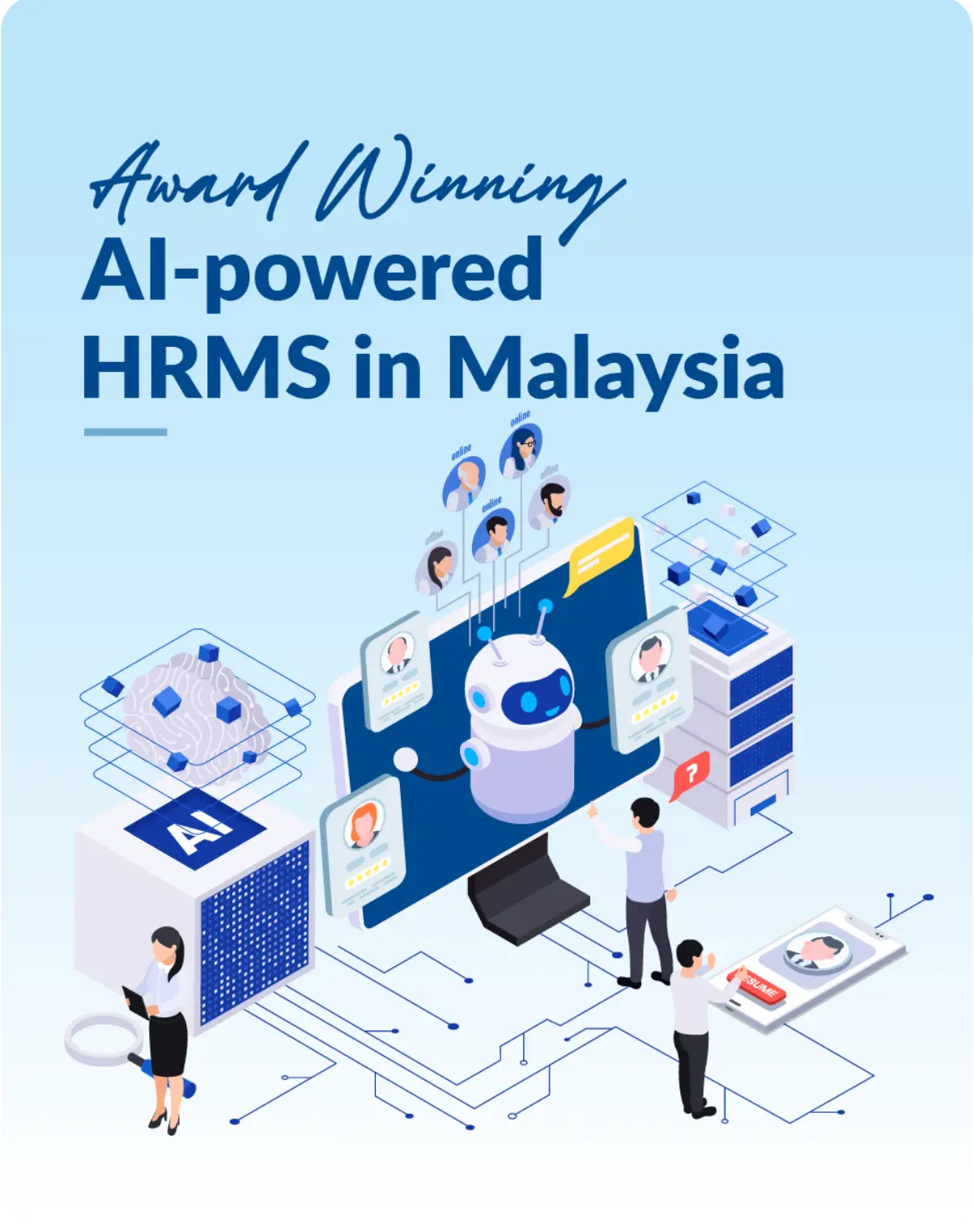
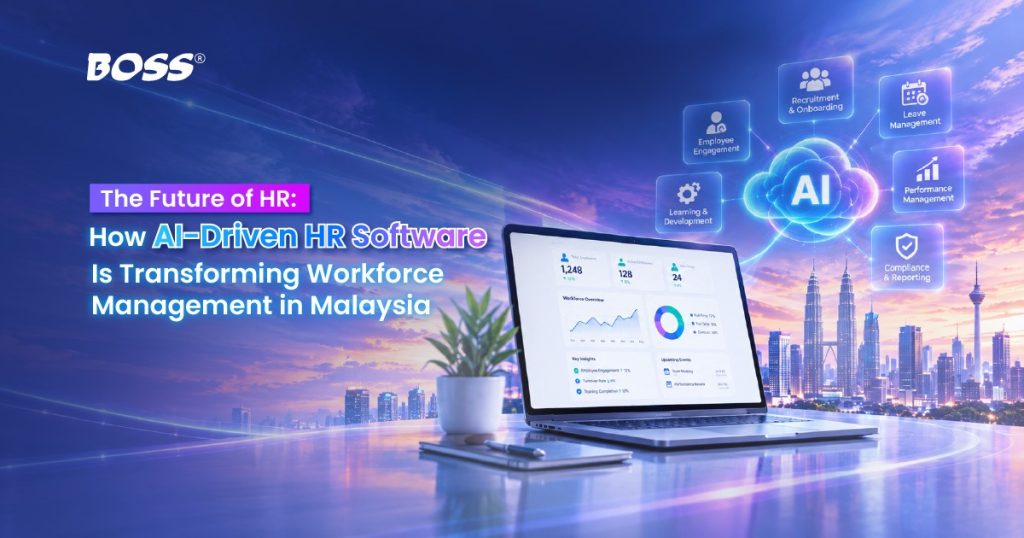
BOSS Enterprise AI HRMS incorporates several AI-powered capabilities, including AI Flight Risk Management, an AI-powered HR chatbot and AI Talent Matching.
AI and Employee Retention
Employee turnover can create significant operational challenges, particularly when organisations lose experienced employees and need to recruit and onboard replacements.
BOSS’s AI Flight Risk Management feature uses behavioural analytics to examine factors such as attendance trends, engagement levels and performance data. The system is designed to provide early indications of potential flight risk, giving HR teams an opportunity to consider appropriate retention measures.
The broader implication is significant: HR teams can move from responding to turnover after it occurs towards identifying workforce patterns that may warrant closer attention.
AI does not determine why an employee may leave. Rather, it can provide additional information for HR professionals to consider alongside organisational context and human judgement.
AI-Powered Employee Support
Another area where AI can make a practical difference is employee service delivery.
Questions relating to leave balances, claims, HR policies and payslips can consume considerable amounts of HR time when handled manually. BOSS’s AI-powered chatbot is designed to provide employees with conversational access to HR-related information, helping reduce repetitive enquiries and allowing HR professionals to concentrate on more strategic responsibilities.
This illustrates one of the most immediate applications of AI in HR: using intelligent self-service to make information more accessible while reducing administrative friction.
AI in Recruitment
Recruitment is another area where organisations increasingly face information overload. When hundreds of applications are received for a position, reviewing candidates against multiple skills, qualifications and experience requirements can be time-consuming.
BOSS AI Talent Matching is designed to help address this challenge by matching candidates with job roles based on skills, experience and qualifications. This can support faster candidate shortlisting while providing HR teams with additional data to inform recruitment decisions.
The role of AI here is not to eliminate human involvement in hiring, but to help recruitment teams manage information more efficiently and focus their attention where it can have greater value.
What Should Businesses Look for in the Best HR Software in Malaysia?
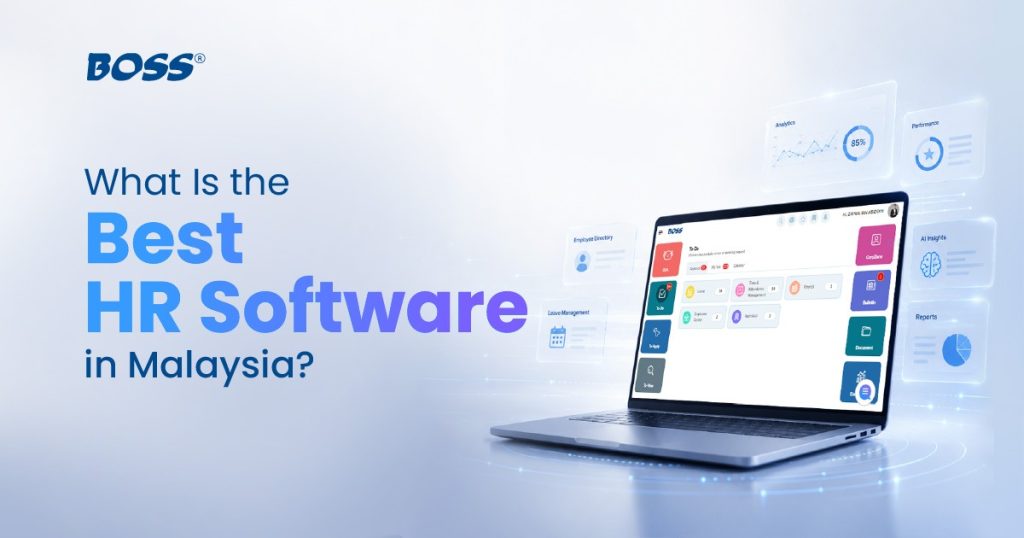
The search for the best HR software in Malaysia is becoming less about finding a system with the longest feature list and more about identifying technology that fits an organisation’s operating environment and long-term workforce strategy.
Several factors deserve consideration.
1. Comprehensive HR Capabilities
A modern HR platform should connect core HR functions rather than creating additional silos.
Payroll, attendance, leave, claims, recruitment, performance management, training and employee self-service should ideally work within an integrated environment. This allows information to move more efficiently between HR processes and reduces dependence on disconnected spreadsheets and applications.
2. AI and Intelligent Automation
Automation remains fundamental to HR digitalisation, but organisations are increasingly looking beyond rule-based automation.
When evaluating AI-driven HR software, businesses should consider how AI is actually being applied: whether it supports workforce insights, employee services, recruitment or other meaningful HR processes. The quality and relevance of these applications matter more than simply having “AI” attached to a product description.
3. Malaysian Regulatory Requirements
For Malaysian businesses, local compliance is an essential consideration.
Payroll and HR processes must account for statutory requirements, including EPF, SOCSO, EIS and PCB, as well as relevant LHDN requirements.
BOSS Enterprise HRMS is designed specifically for Malaysian businesses and supports these requirements within its payroll environment.
4. Scalability
An HR platform should be capable of evolving alongside the organisation.
BOSS Enterprise HRMS is designed to support organisations ranging from hundreds to thousands of employees, providing a foundation for businesses as their workforce requirements become more complex.
Scalability, however, should not be measured solely by employee numbers. Organisations should also consider whether the platform can accommodate additional locations, business entities, workforce structures and HR requirements over time.
5. Employee Experience
Digital HR transformation is not solely an HR initiative. Employees are increasingly active users of HR technology.
Employee Self-Service capabilities can allow employees to access payslips, submit leave applications and claims, and update personal information through digital channels.
A well-designed employee experience can reduce unnecessary administrative interactions while giving employees greater visibility and control over routine HR matters.
Security Must Remain at the Centre of HR Technology
As HR systems become more sophisticated, the volume and sensitivity of information they manage also increase.
Employee records, payroll information, identification documents and other personal data require strong security controls. Consequently, security should be considered alongside functionality when organisations evaluate HR technology.
BOSS Enterprise HRMS highlights several security measures and certifications, including ISO/IEC 27001:2013, SOC 2 Type II, penetration testing, source code review and Security Information and Event Management (SIEM).
For organisations evaluating an HRMS, these credentials should be considered as part of a broader assessment of information security governance, access controls, data protection practices and risk management.
The Malaysian Context: Local Expertise Meets Global Technology Trends
Malaysia’s HR technology market is developing within a broader global movement towards cloud computing, automation and artificial intelligence.
However, technology cannot be separated from local business requirements.
Payroll regulations, statutory obligations, workforce practices and organisational structures differ across markets. This makes local knowledge an important consideration when selecting enterprise HR technology.
BOSS Enterprise Solutions was established in 1990 and has more than three decades of experience serving Malaysian organisations across industries including manufacturing, retail, construction, education and services. That experience provides a foundation for combining local HR requirements with newer technologies such as cloud-based platforms and AI.
The Evolution of the HR Function
The transformation of HR technology ultimately reflects a broader transformation in the HR function itself. As routine administration becomes increasingly automated, HR professionals have more opportunity to focus on areas where human judgement remains essential: organisational culture, leadership, employee development, workforce planning and business strategy.
The role of technology is therefore not simply to make existing processes faster. It is to create an HR operating environment in which information is connected, routine work is automated and decision-makers have better visibility of their workforce. This is where AI-driven HR software is likely to have its greatest long-term impact.
Choosing the Right HR Technology for the Future
There is no universal definition of the best HR software in Malaysia. The right solution depends on an organisation’s workforce size, industry, operating model, compliance requirements, technology environment and strategic priorities. However, the direction of HR technology is becoming increasingly clear. Businesses are moving away from fragmented, manually intensive HR processes towards integrated platforms that combine automation, employee self-service, workforce analytics and artificial intelligence.
For Malaysian organisations exploring this transition, BOSS Enterprise HRMS provides an example of how an established local HR technology platform is incorporating AI into a broader HR management ecosystem.
With capabilities spanning core HR, payroll, attendance, leave, claims, recruitment, employee development and AI-powered workforce tools, the platform reflects a wider shift in the market: HR technology is no longer simply about managing records. It is increasingly about creating the intelligence and infrastructure needed to manage people more effectively.
As organisations prepare for the next phase of workforce transformation, the question is no longer whether HR will become more digital. It is how intelligently that digital transformation is implemented.