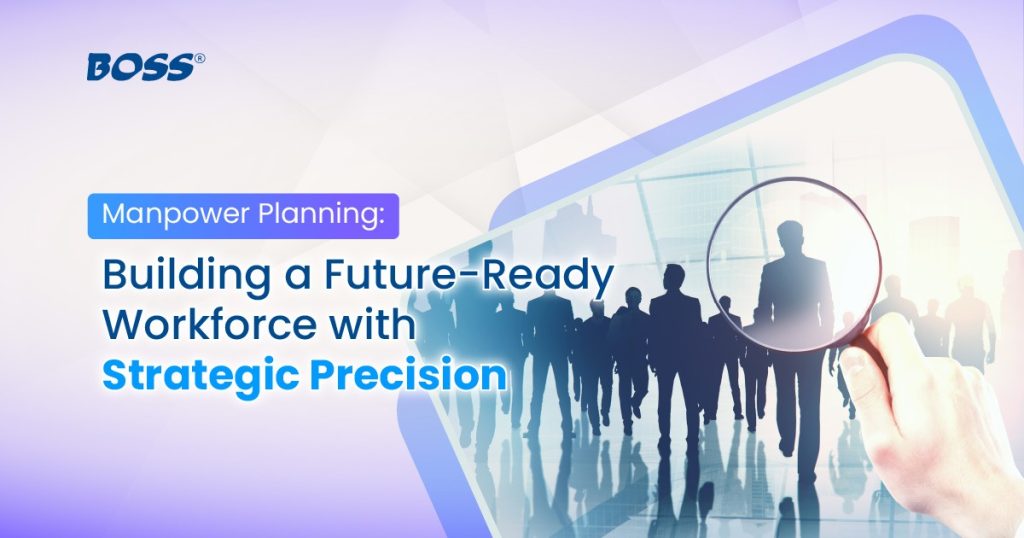
Nowadays, organizations can no longer rely on reactive hiring or guesswork when it comes to workforce management. The ability to anticipate, allocate, and optimize human resources has become a critical factor in achieving sustainable growth. This is where manpower planning—also known as strategic workforce planning—plays a vital role. Manpower planning is more than simply filling vacancies. It is a structured, forward-looking approach that ensures the right number of people, with the right skills, are in the right roles at the right time. When executed effectively, it empowers organizations to balance operational demands with financial efficiency, while positioning themselves for long-term success.
The Importance of Strategic Workforce Planning
Businesses today face a variety of challenges: economic uncertainty, evolving workforce expectations, digital transformation, and increasing competition. Without a clear manpower strategy, organizations risk overstaffing, understaffing, or misallocating talent—all of which can negatively impact productivity and profitability.
Strategic workforce planning helps organizations:
- Align human resources with business objectives
- Control labor costs and improve budget accuracy
- Enhance productivity through optimized workforce allocation
- Anticipate future talent needs and skill gaps
- Support scalable growth and organizational agility
By adopting a data-driven approach, companies can make informed decisions rather than relying on assumptions, ultimately creating a more resilient and efficient workforce.
Transforming Manpower Planning with BOSS HR System
To effectively implement manpower planning, organizations need more than spreadsheets and manual tracking. This is where the BOSS HR System comes into play. Designed to support modern HR needs, its Strategic Workforce Planning feature enables businesses to optimize workforce allocation, streamline budgeting, and make smarter hiring decisions—all within a centralized platform. By integrating manpower data, financial insights, and forecasting tools, the system empowers HR teams and management to take full control of workforce planning with confidence and clarity.
1. Comprehensive Manpower Headcount Planning and Analysis
One of the fundamental aspects of manpower planning is having full visibility into workforce distribution. Organizations need to know exactly how many employees are assigned to each department, what roles they occupy, and how effectively they are contributing to business goals.
With a comprehensive headcount planning and analysis feature, businesses can:
- Track employee distribution across departments and locations
- Monitor workforce changes in real time
- Identify manpower shortages before they disrupt operations
- Detect surplus staffing that may lead to unnecessary costs
This level of insight ensures that organizations maintain an optimal balance—avoiding both understaffing, which can lead to burnout and inefficiency, and overstaffing, which increases operational expenses.
2. Accurate Manpower Headcount Budgeting
Financial planning and workforce planning go hand in hand. Without accurate manpower budgeting, organizations may struggle with overspending or misaligned recruitment efforts. Strategic workforce planning tools within the BOSS HR System enable businesses to:
- Allocate manpower costs effectively across departments
- Align hiring plans with financial budgets
- Forecast salary expenses and workforce investments
- Ensure recruitment activities stay within planned budgets
This structured approach not only improves financial discipline but also enhances collaboration between HR and finance teams. As a result, organizations can make hiring decisions that are both strategic and financially sustainable.
3. Expert Forecasts for Future Staffing Needs
One of the most valuable aspects of manpower planning is the ability to look ahead. Businesses that rely solely on current workforce data may struggle to adapt to future demands, especially in dynamic industries.
Advanced forecasting tools allow organizations to:
- Predict staffing needs based on business growth trends
- Prepare for seasonal fluctuations in demand
- Support expansion plans with proactive hiring strategies
- Identify future skill gaps and plan training initiatives
With these insights, companies can transition from reactive hiring to proactive workforce management. This ensures that talent is always available when needed, without the pressure of last-minute recruitment.
4. Reduce Labor Costs with Optimized Planning
Labor costs often represent one of the largest expenses for any organization. Without proper planning, these costs can quickly spiral out of control, affecting overall profitability.
Through strategic manpower planning, businesses can:
- Analyze workforce allocation to identify inefficiencies
- Eliminate redundant roles or overlapping responsibilities
- Optimize staff deployment for maximum productivity
- Improve return on investment (ROI) for workforce expenditures
The BOSS HR System supports this process by providing actionable insights and data visualization, enabling decision-makers to fine-tune their workforce strategy with precision.
5. Enhance the Recruitment Process with Strategic Insights
Recruitment is most effective when it is guided by data rather than urgency. Strategic manpower planning ensures that hiring efforts are aligned with actual business needs and long-term goals.
With the right tools, organizations can:
- Identify the exact roles and skills required
- Plan recruitment timelines more effectively
- Avoid unnecessary or premature hiring
- Improve the quality of hires through better alignment
By leveraging insights from workforce data, HR teams can attract the right talent at the right time—reducing turnover and improving overall workforce stability.
Driving Efficiency and Growth Through Smarter Workforce Planning
Manpower planning is no longer a back-office function—it is a strategic priority that directly impacts business performance. Organizations that invest in structured workforce planning are better equipped to navigate uncertainty, scale efficiently, and maintain a competitive edge.
The integration of digital solutions like the BOSS HR System further enhances this capability by transforming complex data into clear, actionable insights. From headcount management to forecasting and budgeting, it provides a comprehensive platform for modern workforce optimization.
In an era where agility and efficiency define success, manpower planning has become an essential component of business strategy. By aligning workforce capabilities with organizational goals, companies can achieve a balance between cost control and operational excellence.
With the support of advanced tools such as the BOSS HR System, organizations can move beyond traditional HR practices and embrace a more strategic, data-driven approach to workforce management. The result is a future-ready organization—one that is equipped to grow, adapt, and thrive in an ever-changing business landscape.