Human resource management is evolving beyond traditional administration. As organisations manage increasingly complex workforces, rising employee expectations, and growing demands for operational efficiency, AI-driven HR software is becoming an important part of digital transformation. For Malaysian businesses, the right HR technology can help streamline recruitment, automate repetitive tasks, improve workforce visibility, and support more informed HR decisions.
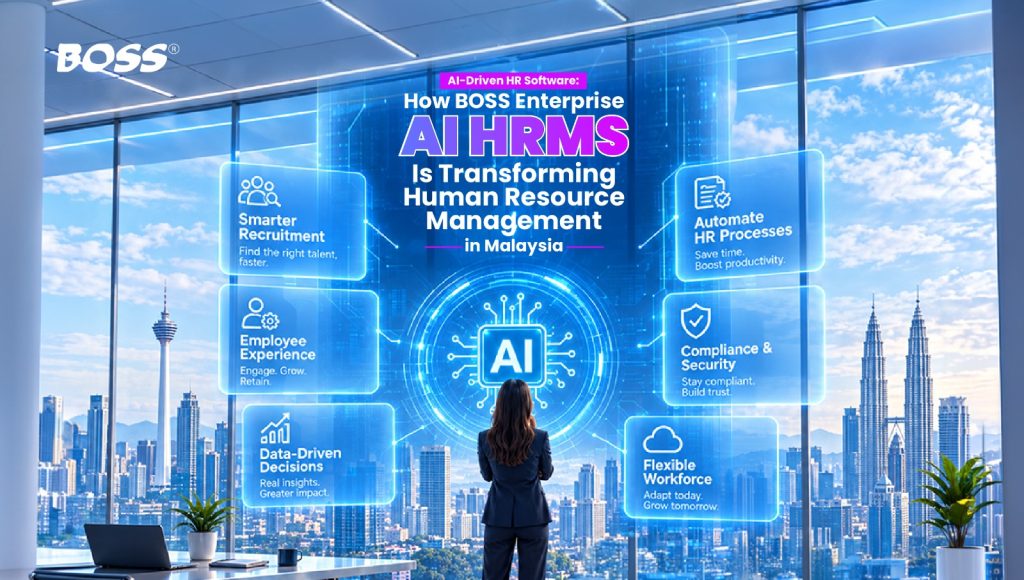
BOSS Enterprise AI HRMS brings together AI-powered capabilities and integrated human resource management tools to help organisations modernise their HR operations. From AI-assisted recruitment and OCR-powered claims processing to time and attendance management, payroll, and employee self-service, businesses can manage more HR processes within a connected platform.
What Is AI-Driven HR Software?
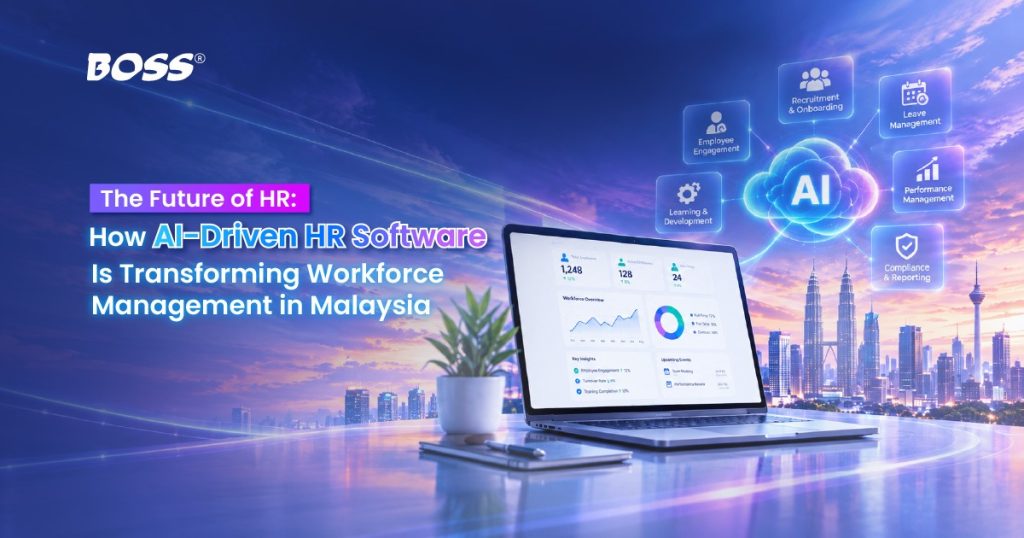
AI-driven HR software is a human resource management solution that uses artificial intelligence to assist with HR tasks, analyse information, automate selected processes, and support better decision-making throughout the employee lifecycle.
Unlike conventional HR software that primarily records information and follows predefined workflows, AI-driven HR software can use capabilities such as natural language processing, document recognition, pattern analysis, and intelligent recommendations to assist with specific tasks.
Depending on the solution, these capabilities can support:
Payroll and claims: Reducing repetitive data entry and assisting with document processing.
Time and attendance: Identifying attendance irregularities and supporting workforce analysis.
Employee self-service: Helping employees access HR information and complete routine requests.
Workforce management: Providing insights that help HR teams and managers plan and manage employees more effectively
Recruitment: Assisting with job descriptions, resume screening, candidate evaluation, and interview coordination.
AI-driven HR software does not replace the need for HR professionals. Instead, it helps them spend less time on repetitive administrative work and more time on employee engagement, workforce planning, talent development, and strategic initiatives.
Why Is AI-Driven HR Software Becoming a Business Trend?
The growing adoption of AI-driven HR software reflects a broader shift towards automation, data-informed decision-making, and more connected business operations.
1. Increasing HR Workloads and Workforce Complexity
HR teams must manage recruitment, employee records, payroll, leave, claims, attendance, performance, and compliance requirements. These responsibilities become more challenging when organisations operate across multiple departments, locations, shifts, or business entities. Manual processes can create duplicated work, delays, and inconsistent information. AI-assisted workflows can reduce selected repetitive tasks and help HR teams manage growing workloads more efficiently.
2. The Demand for Faster and More Efficient Recruitment
Recruitment teams may receive large numbers of applications while managing multiple vacancies and hiring managers. Reviewing resumes, preparing job descriptions, evaluating candidates, and arranging interviews can consume considerable time. AI recruitment tools can assist with these activities, helping recruiters organise candidate information and prioritise applications for further review.
3. The Shift Towards Data-Driven HR Decisions
Modern HR management requires more than maintaining employee records. Businesses need visibility into attendance, overtime, staffing requirements, employee performance, and workforce trends. When HR information is available through integrated systems and meaningful reports, managers can better identify operational issues and make informed decisions.
4. The Need to Reduce Repetitive Administrative Work
Tasks such as entering receipt details, answering routine employee questions, and processing recurring requests can take up valuable working hours.
AI capabilities can assist with document recognition, information retrieval, and selected workflow activities, allowing employees and HR teams to focus on work that requires human judgement.
5. The Growth of Digital and Connected Workplaces
Businesses increasingly need HR systems that support office employees, remote workers, frontline teams, and shift-based workforces. AI-driven HR software, combined with mobile access and integrated HR workflows, can help organisations improve information accessibility and manage HR processes across different working environments.
For Malaysian enterprises, these capabilities are particularly relevant to industries such as manufacturing, retail, healthcare, hospitality, banking, and other sectors with complex workforce requirements.
How Does AI-Driven HR Software Change HR Operations?
AI-driven HR software changes HR operations by moving selected activities from manual, repetitive processes towards more automated, connected, and information-led workflows.
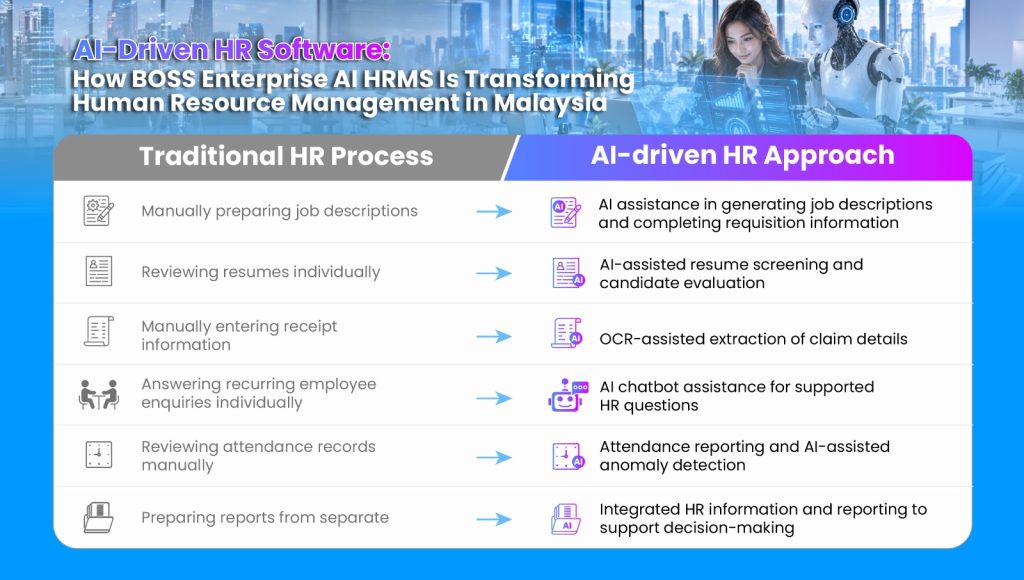
The extent of automation depends on the system’s capabilities, configuration, data quality, and organisational workflows. Human review remains important for decisions involving employment, reimbursement approvals, payroll accuracy, and employee welfare.
1. From Manual Recruitment to AI-Assisted Hiring
Recruitment often involves several disconnected activities, including preparing job descriptions, collecting applications, screening resumes, evaluating candidates, and coordinating interviews. AI-assisted recruitment can streamline parts of this process by helping hiring managers prepare requisitions, extract relevant candidate information, identify potential matches against job requirements, and organise interview arrangements.
Recruiters can then focus on evaluating suitability, engaging candidates, and making informed hiring decisions.
2. From Manual Claims Entry to Intelligent Document Processing
Expense claim processing can involve collecting receipts, entering transaction details, checking supporting documents, identifying duplicates, and submitting claims for approval.
OCR (Optical Character Recognition) helps extract text from images and documents. When integrated with AI-assisted claim processing, it can reduce manual data entry and help identify potential duplicate submissions.
This is particularly useful for employees who regularly submit petrol, parking, accommodation, meal, or other eligible business expense claims.
3. From Reactive Attendance Management to Better Workforce Visibility
Attendance management can become complicated when organisations operate multiple shifts, locations, or production facilities.
Integrated time and attendance management helps consolidate attendance information, shift schedules, and related records. Where AI-based analytics are available, they can also assist in identifying unusual patterns for further investigation.
This gives HR teams and supervisors better visibility into attendance issues, overtime, and workforce requirements.
4. From Repetitive Enquiries to More Accessible HR Information
Employees frequently need information about leave balances, claims, payslips, company policies, and HR procedures.
An AI chatbot can help answer supported questions and direct employees towards relevant information. This can reduce the volume of routine enquiries handled manually by HR, while allowing HR professionals to concentrate on more complex employee matters.
5. From Disconnected Processes to Integrated HR Management
The value of AI increases when it supports a connected HR environment rather than operating as an isolated tool.
Integrating recruitment, employee records, attendance, leave, claims, payroll, and reporting helps reduce information silos and provides a more consistent view of workforce operations. For growing enterprises, an integrated HRMS can provide a foundation for more efficient processes today and future AI adoption as business requirements evolve.
How Can AI-Driven HR Software Help Your Business?
The benefits of AI-driven HR software extend beyond automation. When implemented appropriately, it can help businesses improve operational efficiency, information accessibility, and workforce management.
Improve HR Productivity
Automating or assisting with repetitive tasks can reduce the time HR teams spend on administrative activities. This creates more capacity for employee engagement, talent development, workforce planning, and other strategic responsibilities.
Support Faster Recruitment Workflows
AI-assisted job requisitions, resume screening, candidate evaluation, and interview coordination can help recruitment teams organise hiring activities more efficiently. AI-generated recommendations should support, rather than replace, structured assessments and human judgement.
Reduce Manual Data Entry
OCR-assisted claim processing can extract information from receipts and reduce the need to enter every detail manually. This helps simplify the submission process and supports more consistent recordkeeping.
Improve Workforce Visibility
Integrated HR information and reporting can help HR professionals and managers review attendance, overtime, staffing, and other workforce indicators in a more organised way.
Support More Consistent HR Processes
Standardised workflows, centralised records, and configurable approval processes can help organisations apply their HR procedures more consistently across departments and locations.
Strengthen the Employee Experience
Mobile HR access, employee self-service, and AI chatbot assistance can make routine HR information easier to access, subject to the features and permissions configured by the organisation.
Build a Foundation for Scalable HR Management
As a business grows, its HR requirements often become more complex. An integrated HRMS helps organisations manage expanding employee populations, multiple locations, and interconnected HR processes within a more structured environment.
Actual results depend on the organisation’s existing processes, implementation, data quality, and adoption by employees and managers.
BOSS Enterprise AI HRMS: AI-Driven HR Software for Malaysian Enterprises
BOSS Enterprise AI HRMS is designed to help organisations manage interconnected HR processes through an integrated human resource management platform.
With a foundation in HR management and payroll-related workflows, the solution brings together a broad range of capabilities to support workforce administration, employee services, and operational management.
Its capabilities include:
AI-assisted recruitment to support job requisition preparation, resume screening, candidate evaluation, and interview coordination.
AI-powered OCR Claim to assist with receipt information extraction and potential duplicate-claim detection.
Time and attendance management to support attendance tracking and workforce administration.
Payroll management to manage payroll processes in supported jurisdictions.
Leave and claims management to help organise employee requests and approval workflows.
Employee self-service and mobile HR access to make supported HR services more accessible.
Reporting and workforce insights to help HR teams and managers review relevant operational information.
BOSS Solutions Global has more than 30 years of experience in HR technology in Malaysia. BOSS Enterprise AI HRMS is intended to support organisations seeking an integrated HR management environment that can address current operational requirements while embracing relevant AI capabilities.
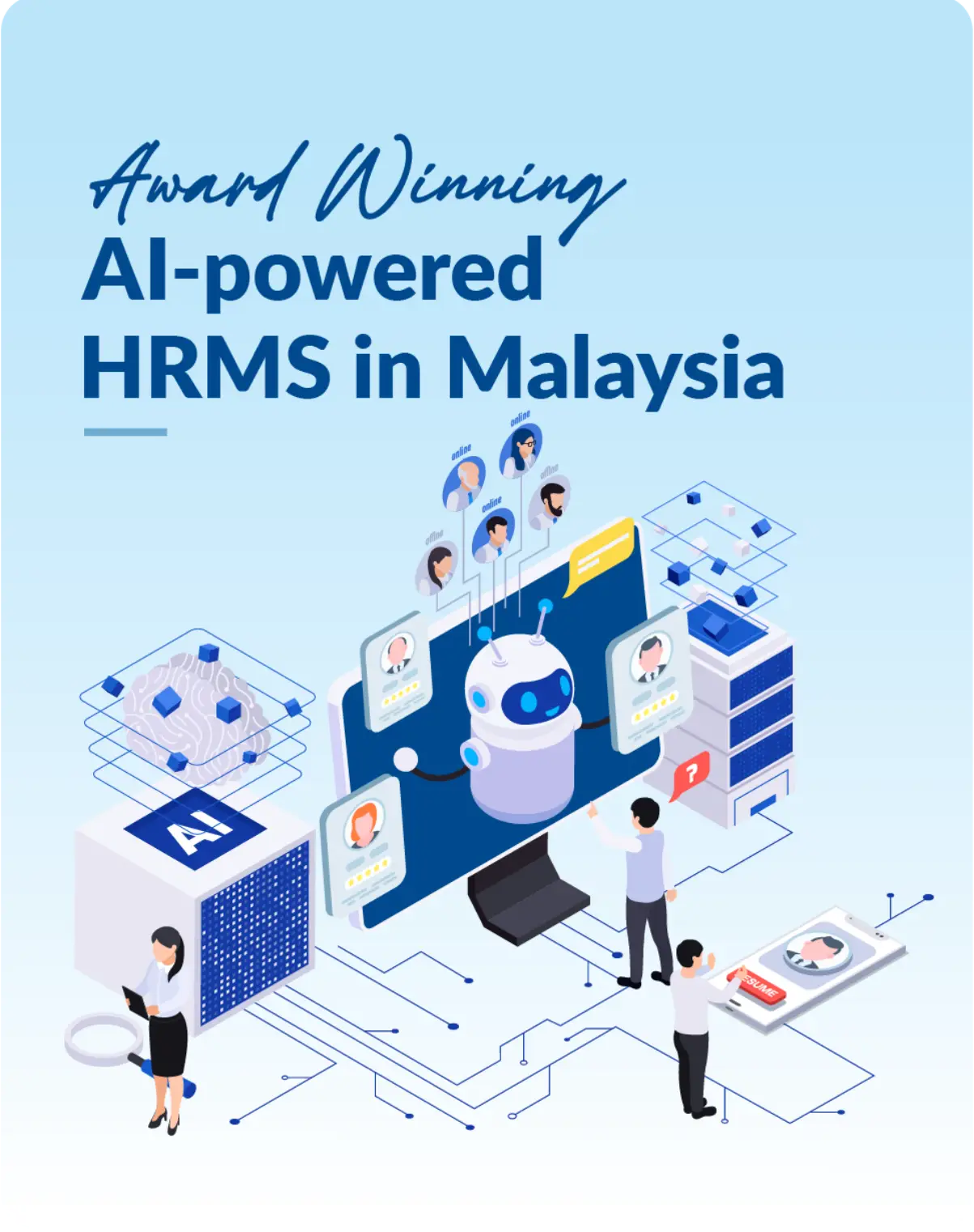
Award-Winning HR Technology with Practical AI Applications
Recognition and awards can help businesses assess an HR technology provider’s track record. When evaluating an award-winning HRMS, organisations should also examine how its features address real operational challenges. BOSS Enterprise AI HRMS combines AI-assisted capabilities with established HR workflows, helping organisations explore practical applications of AI in recruitment, expense claim processing, workforce administration, and employee services.
For prospective customers, it is important to review the specific award, awarding organisation, award category, and year to understand what the recognition represents.
Discover the New AI Features in BOSS Enterprise AI HRMS
BOSS Enterprise AI HRMS is expanding its AI capabilities to address two common administrative challenges: recruitment and expense claim processing.
1. AI Recruitment: Simplify Hiring from Requisition to Interview
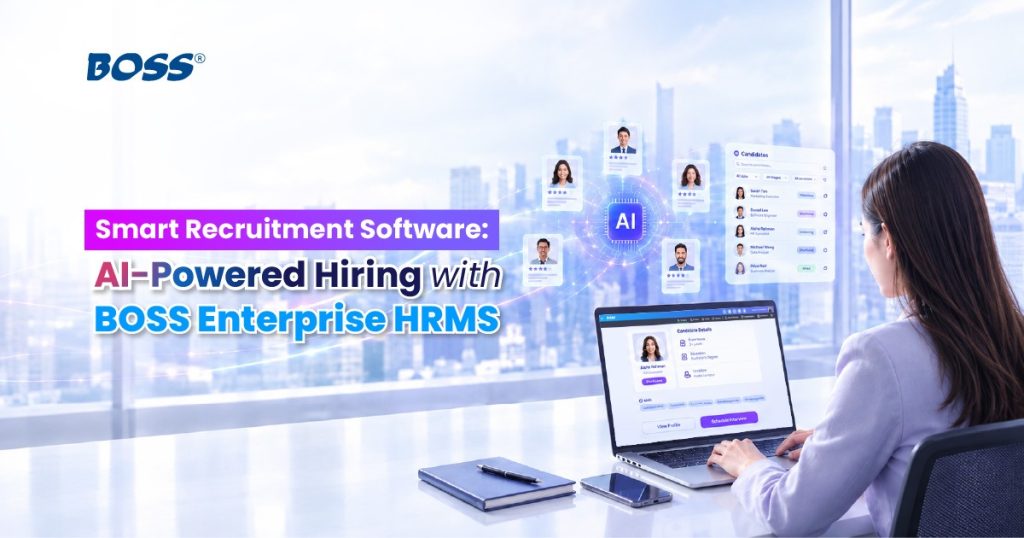
Recruitment involves more than identifying candidates. Hiring managers must define job requirements, prepare requisitions, evaluate applications, and coordinate with recruiters and interviewers. The AI Recruitment capabilities in BOSS Enterprise AI HRMS are designed to assist with key stages of this workflow.
AI-assisted job requisition creation
Hiring managers can use AI assistance to generate job descriptions based on position requirements, help complete requisition forms through prompts, and identify missing information that may need clarification. This can reduce repetitive preparation work and help improve the completeness of recruitment requests.
AI-assisted resume screening and candidate evaluation
AI can assist in extracting relevant information from resumes and assessing potential matches against the stated job requirements. The system can help organise candidate information, surface relevant strengths and potential gaps, and support shortlisting. These outputs should be treated as decision-support information, not definitive judgements of a candidate’s ability or suitability.
Interview coordination
AI-assisted recruitment workflows can support interview preparation, question generation, and scheduling activities, helping hiring teams coordinate the next stage of the recruitment process.
Human oversight remains essential
Hiring managers retain responsibility for evaluating candidates and making hiring decisions. Organisations should use appropriate access controls and review AI-generated recommendations for relevance, accuracy, and potential bias. The objective is to make recruitment workflows more organised and efficient while keeping human judgement at the centre of hiring.
2. AI-Powered OCR Claim: Simplify Expense Claim Submission
Employees who travel for work or incur eligible business expenses may need to submit multiple receipts for petrol, parking, accommodation, meals, and other expenses. Manually entering receipt details can be repetitive and time-consuming for both employees and administrators. BOSS Enterprise AI HRMS introduces AI-powered OCR Claim capabilities to help streamline this process.
Extract receipt information automatically
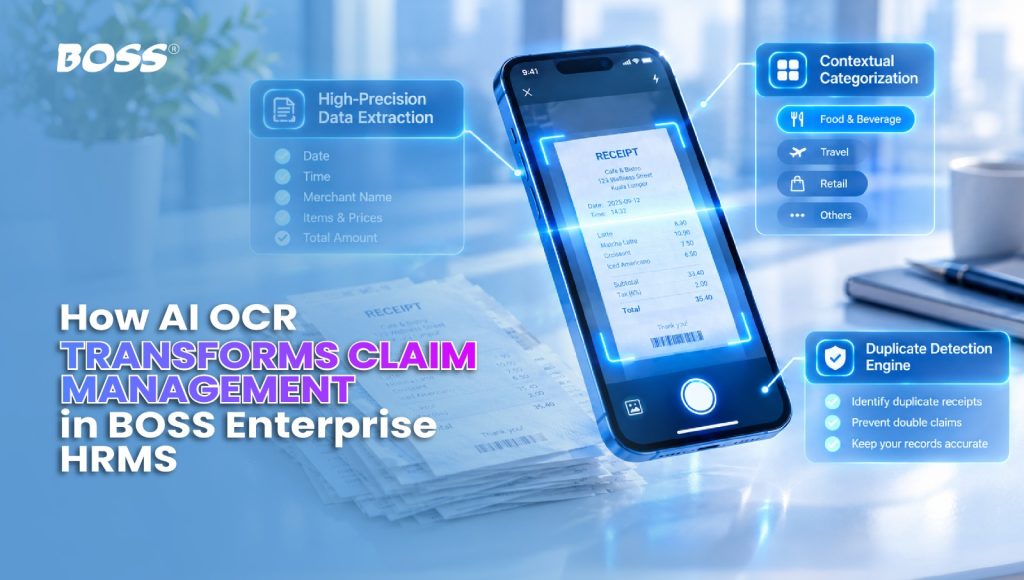
OCR technology can read information from receipt images and help populate relevant claim details, reducing manual data entry.
Assist with duplicate-claim detection
The system can help identify potential duplicate submissions for further checking, supporting more effective expense claim controls.
Support more convenient claim processing
By reducing repetitive entry and organising claim information, AI-assisted OCR can help employees submit claims more efficiently and help administrators review submissions. For example, an employee returning from a month-long business trip may have numerous petrol, parking, accommodation, and meal receipts to submit. OCR-assisted processing can reduce the burden of entering each receipt manually, while the normal approval process remains in place. Receipt recognition and duplicate detection should be supported by appropriate validation and human review. OCR can make mistakes, and potential duplicate flags should be checked before a claim is rejected or withheld.
Security and Trust: An Important Consideration When Choosing AI-Driven HR Software
HR systems handle sensitive business and employee information, including personal records, payroll details, attendance data, recruitment documents, and expense claims.
For this reason, choosing AI-driven HR software requires more than evaluating automation features. Businesses should also assess the provider’s information security practices, access controls, and governance arrangements. BOSS iNET’ security-related assurance and review measures include the following, subject to the applicable certification scope and assessment arrangements.
ISO/IEC 27001:2013
ISO/IEC 27001 is an information security management standard. Organisations should verify the relevant certificate, certification body, validity period, and scope when assessing a provider’s certification.
SOC 2 Type II
A SOC 2 Type II report evaluates relevant controls over a defined review period against applicable trust services criteria. Prospective customers should confirm the report’s scope and availability with the provider.
Security Information and Event Management (SIEM)
SIEM capabilities can help organisations collect and analyse security-related events to support monitoring, investigation, and incident response.
Penetration testing and source code review
These security assessment activities can help identify potential vulnerabilities in applications and related systems. Their effectiveness depends on the scope, methodology, frequency, and remediation of findings.
These measures address different aspects of security and should not be treated as interchangeable certifications. Businesses should also ask how employee data is accessed, retained, protected, and processed by AI features, including whether external AI services or third-party processors are involved. For organisations evaluating BOSS Enterprise AI HRMS, security due diligence should form part of the broader assessment of system suitability, data protection, and operational requirements.
How to Choose the Right AI-Driven HR Software
Not every HRMS offers the same AI capabilities. Before selecting a solution, businesses should assess whether the software addresses their actual operational challenges.
Consider these seven factors:
Relevant AI functionality: Does the system offer practical features for recruitment, claims, employee services, or other priority workflows?
HRMS integration: Can AI-assisted functions work with the organisation’s existing HR processes and employee records?
Human oversight: Can users review AI-generated outputs, correct errors, and retain control over important decisions?Security and data governance: Are security controls, certifications, access permissions, and AI data-processing practices clearly explained?
Scalability: Can the system support the organisation’s workforce size, locations, and changing operational needs?
Local business requirements: Does the solution support applicable Malaysian payroll and HR processes? Confirm jurisdiction-specific requirements with the provider.
Implementation and support: Are training, onboarding, technical support, and ongoing system improvements available?
The best AI-driven HR software is not necessarily the solution with the greatest number of AI features. It is the one that addresses business needs, integrates with existing processes, and delivers practical value while maintaining appropriate oversight and security.
The Future of HR: From Administrative Management to Strategic Workforce Support
AI-driven HR software is changing how organisations approach recruitment, expense claims, employee services, and workforce administration. However, successful AI adoption requires more than introducing new technology. Businesses need reliable data, clear workflows, appropriate governance, employee acceptance, and human oversight. For Malaysian organisations seeking to modernise their HR operations, BOSS Enterprise AI HRMS brings together integrated HR management and practical AI-assisted capabilities to support a more connected approach to workforce management.
By combining established HR processes with evolving AI features, organisations can work towards reducing repetitive administrative tasks, improving information accessibility, and enabling HR professionals to focus on higher-value responsibilities.
Frequently Asked Questions About AI-Driven HR Software
What is the best AI-driven HR software in Malaysia?
The best AI-driven HR software depends on an organisation’s size, industry, HR processes, integration requirements, security expectations, and budget. Businesses should compare AI capabilities, core HRMS functions, local payroll support, implementation services, and data governance. BOSS Enterprise AI HRMS is one solution to consider for Malaysian organisations seeking integrated HR management with AI-assisted recruitment and OCR Claim capabilities.
What are the main benefits of AI-driven HR software?
The main benefits include reduced repetitive administrative work, AI-assisted recruitment, faster document processing, improved access to HR information, more organised workforce reporting, and support for informed HR decisions. Results depend on the features implemented and how well they fit the organisation’s processes.
How does AI recruitment software help HR teams?
AI recruitment software can assist with job description generation, requisition preparation, resume screening, candidate evaluation, and interview coordination. These capabilities can help organise recruitment workflows, while hiring managers retain responsibility for candidate assessment and final hiring decisions.
What is AI OCR Claim in HR software?
AI OCR Claim uses Optical Character Recognition and related intelligent processing capabilities to extract information from receipt images and assist with expense claim submission. Depending on the system, it may also help identify potential duplicate claims. Human validation and approval remain important.
Is AI-driven HR software suitable for SMEs and large enterprises?
AI-driven HR software can benefit organisations of different sizes, provided the solution matches their operational needs. SMEs may prioritise reducing manual administration, while larger enterprises may require integrated workflows, role-based access, multi-location workforce management, and scalability.
Is AI-driven HR software secure?
Security depends on the provider’s technical controls, system configuration, data governance, and implementation practices. Businesses should review relevant security certifications and reports, access controls, vulnerability assessment practices, data retention policies, and how AI features process employee information.
Will AI-driven HR software replace HR professionals?
AI-driven HR software is designed to assist with selected tasks and workflows, not eliminate the need for HR professionals. Human judgement remains essential for employee relations, complex HR matters, ethical recruitment, policy interpretation, and important employment decisions.
What should Malaysian businesses look for in an AI HRMS?
Malaysian businesses should assess the relevance of AI features, integration with core HR functions, local payroll requirements, security and data governance, reporting, mobile access, scalability, implementation support, and the provider’s experience serving their industry.