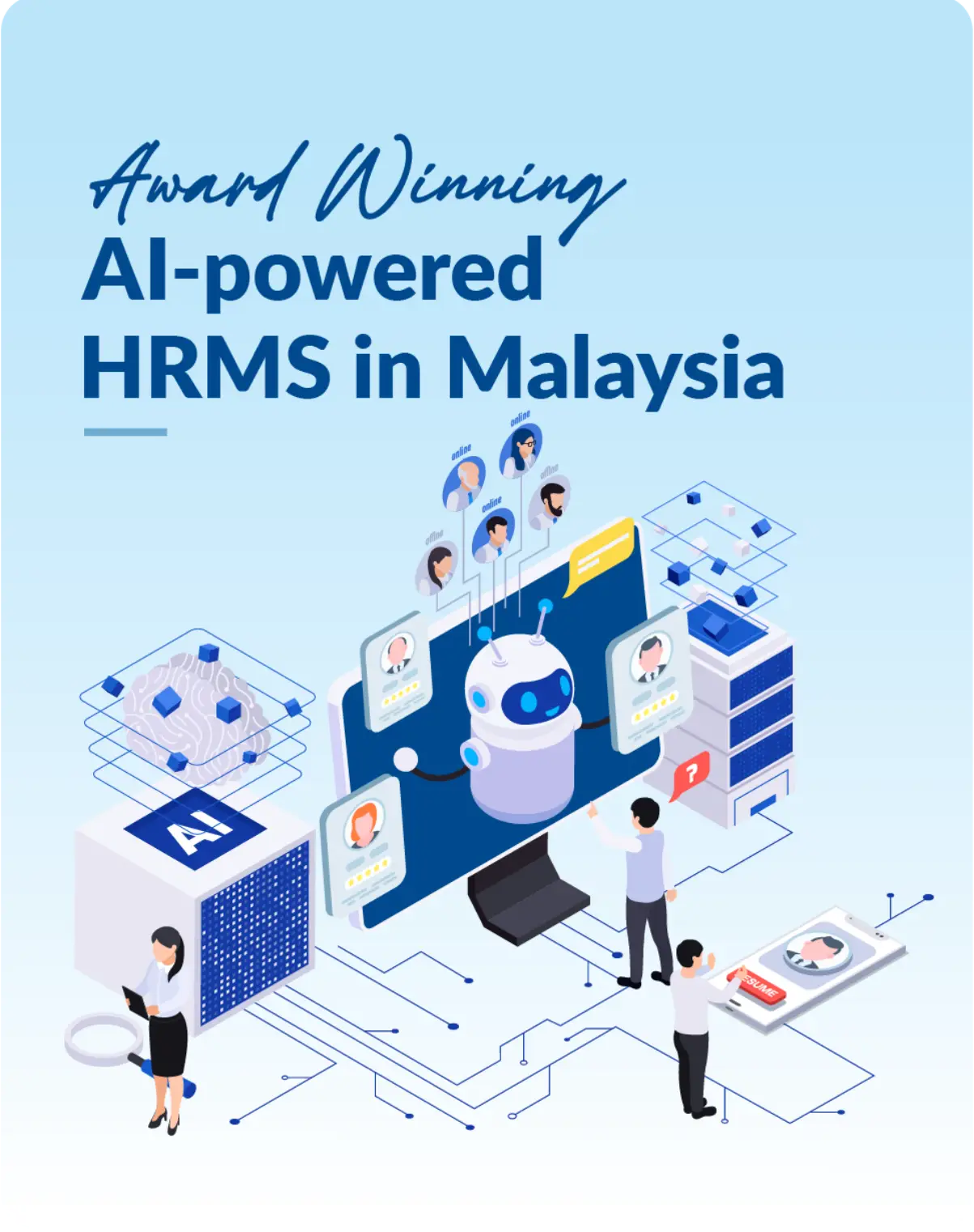
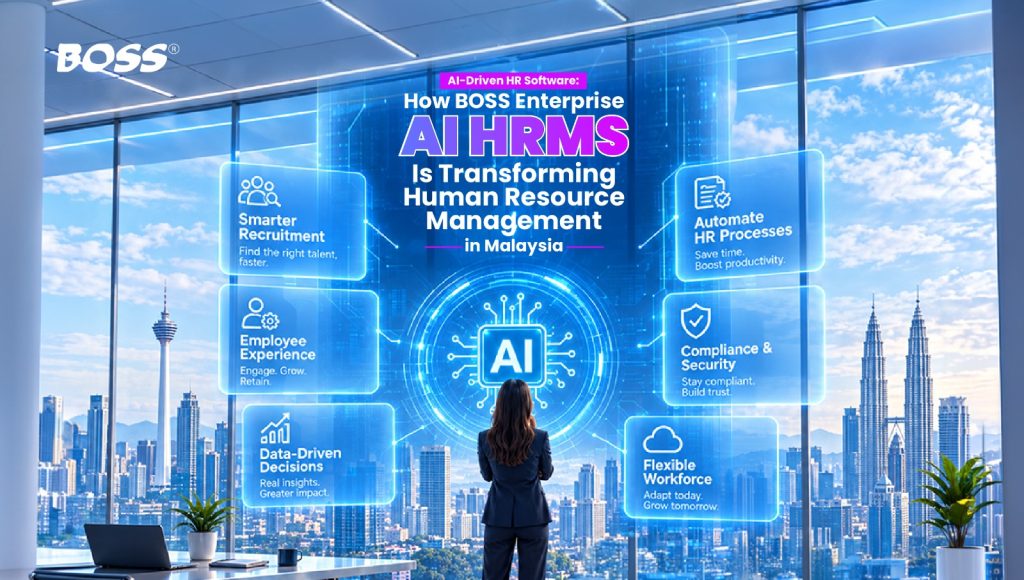
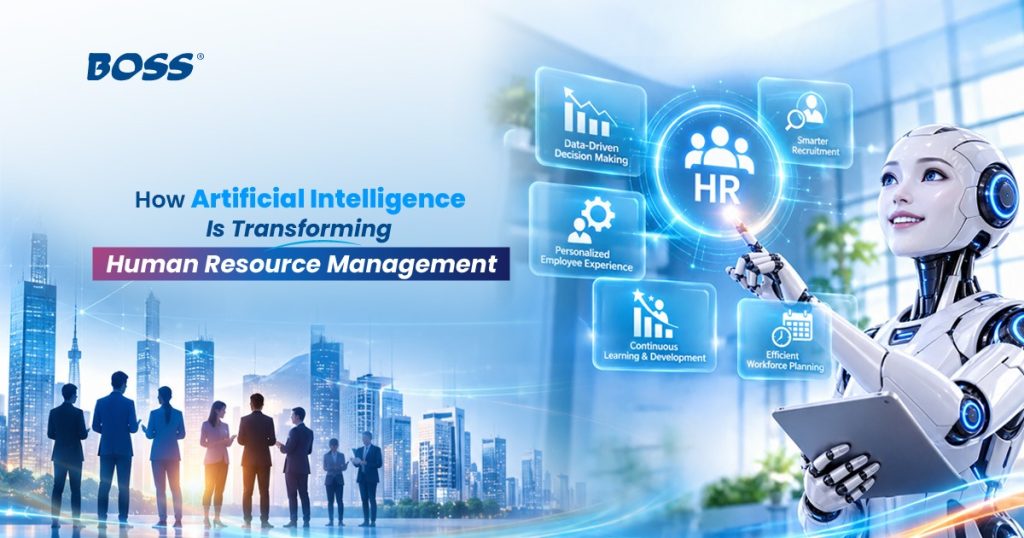
Human Resource (HR) management is evolving rapidly as businesses embrace digital transformation and Artificial Intelligence (AI) to improve workforce management. Traditional HR operations that once relied heavily on manual processes are increasingly moving towards intelligent, automated and data-driven solutions.
From recruitment and payroll administration to employee engagement, workforce planning and talent management, AI is changing how organisations manage their people and HR operations. However, adopting AI in HR is not simply about introducing new technology. It is about identifying the right opportunities to improve operational efficiency, enhance employee experiences and support better business decisions.
This is where AI-powered HR software plays an important role.
By integrating Artificial Intelligence into Human Resource Management Systems (HRMS), organisations can automate repetitive tasks, analyse workforce information, streamline HR processes and gain valuable insights to support strategic workforce decisions.
For businesses looking to modernise their HR operations, AI-powered HR software offers an opportunity to move beyond traditional HR administration towards smarter, more efficient and future-ready workforce management.
What Is AI-Powered HR Software?
AI-powered HR software is a Human Resource Management System (HRMS) that incorporates Artificial Intelligence technologies to automate, analyse and improve various HR activities. It uses technologies such as Machine Learning (ML), Natural Language Processing (NLP), Generative AI and predictive analytics to assist HR professionals in managing tasks that traditionally require significant manual effort. Unlike conventional HR software that primarily focuses on recording employee information and processing administrative transactions, AI-powered HR software can provide intelligent assistance, identify patterns in workforce data and support more informed HR decisions.
For example, AI can assist organisations with:
- Generating job descriptions and supporting recruitment activities.
- Matching candidates with suitable job requirements.
- Automating repetitive HR administrative processes.
- Providing instant responses to employee enquiries through AI chatbots.
- Analysing workforce trends and identifying potential employee turnover risks.
- Supporting employee performance management and talent development.
- Improving workforce planning through data-driven insights.
In simple terms, AI-powered HR software helps organisations manage their workforce more intelligently by combining HR automation, data analytics and AI-assisted decision-making within an integrated HR platform.
Why Is AI Becoming Important in Human Resource Management?
As organisations grow, HR departments face increasing responsibilities in managing employee information, recruitment, payroll, attendance, performance and workforce development. Traditional HR processes can become increasingly complicated when businesses rely on manual data entry, spreadsheets and disconnected systems.
AI technology provides opportunities to simplify these operations while allowing HR professionals to focus on more strategic responsibilities.
Here are several reasons why AI is becoming increasingly important in modern HR management.
1. Increasing HR Operational Efficiency
HR departments handle numerous repetitive administrative tasks, including processing employee requests, managing documents, preparing reports and coordinating recruitment activities. AI-powered HR software can assist in automating these tasks, reducing manual workloads and allowing HR teams to allocate more time to strategic activities.
2. Supporting Data-Driven HR Decisions
Workforce information contains valuable insights into employee performance, attendance, engagement and turnover. AI can analyse large volumes of data to identify trends and patterns, helping HR professionals make more informed decisions about workforce planning, talent development and employee retention.
3. Improving Employee Experience
Employees increasingly expect convenient access to HR services and information. AI-powered chatbots and virtual assistants can help employees obtain answers to common HR questions, such as leave policies, claims procedures and payslip enquiries, without always requiring direct assistance from HR personnel.
4. Managing Growing Workforce Requirements
For businesses with multiple departments, branches or large employee populations, managing workforce information can be challenging. AI-powered HR solutions can help organisations streamline processes, improve information visibility and support workforce management across different business operations.
5. Preparing HR Departments for the Future
As digital transformation continues, HR professionals need to develop new capabilities in data analysis, technology adoption and strategic workforce management. AI-powered HR software provides tools that help organisations modernise HR operations and adapt to evolving business requirements.
What Types of AI Technologies Are Used in HR Software?
Different Artificial Intelligence technologies serve different purposes within HR management systems. Understanding these technologies helps organisations identify how AI can improve their HR operations.
1. Generative AI
Generative AI creates new content based on information and instructions provided by users.
In HR management, it can assist with:
- Generating job descriptions and recruitment advertisements.
- Drafting HR policies and internal communications.
- Preparing employee training materials.
- Generating interview questions.
- Summarising HR information and reports.
Generative AI helps HR professionals reduce the time spent preparing documents and repetitive written content.
2. Conversational AI
Conversational AI uses Natural Language Processing (NLP) to understand and respond to human language. It is commonly used in HR chatbots and virtual assistants to provide employees with convenient access to HR information.
Examples include:
- Answering frequently asked questions about HR policies.
- Providing information about leave entitlements.
- Assisting with claims-related enquiries.
- Helping employees access payslip information.
- Guiding employees through common HR procedures.
By providing more accessible HR support, conversational AI can improve employee self-service and reduce repetitive enquiries handled by HR teams.
3. Machine Learning (ML)
Machine Learning allows computer systems to identify patterns in data and improve their predictions based on information and historical trends.
In HR, machine learning can support:
- Candidate matching and recruitment screening.
- Employee turnover prediction.
- Workforce trend analysis.
- Employee performance insights.
- Compensation analysis.
For example, AI can analyse workforce patterns to identify potential employee retention risks, allowing HR teams to investigate concerns and develop appropriate retention strategies.
4. Natural Language Processing (NLP)
Natural Language Processing enables AI systems to interpret, analyse and understand written or spoken language.
In HR management, NLP can assist with:
- Analysing employee feedback and survey responses.
- Understanding employee enquiries through chatbots.
- Reviewing job descriptions and candidate information.
- Summarising written feedback and HR documents.
This allows HR teams to process information more efficiently and identify relevant insights from large volumes of text.
5. AI-Powered Automation
AI-powered automation combines intelligent processing with automated workflows to reduce repetitive administrative work.
Common HR applications include:
- Recruitment workflow coordination.
- Employee onboarding and offboarding administration.
- Document processing.
- Payroll-related administrative support.
- Employee information management.
- HR request routing and notifications.
By reducing manual intervention in repetitive processes, AI automation helps improve operational efficiency and minimise avoidable administrative errors.
6. Predictive Analytics
Predictive analytics uses historical and current data to identify patterns and estimate possible future outcomes. In HR, it can help organisations understand potential workforce challenges, such as employee turnover, manpower shortages and skills gaps. These insights allow HR professionals to plan workforce requirements more proactively and develop appropriate strategies to support business objectives.
How Is AI-Powered HR Software Used Across Human Resource Management?
AI is transforming multiple areas of HR, supporting organisations throughout the employee lifecycle.
Here are some practical applications of AI-powered HR software.
1. AI Recruitment and Talent Acquisition
Recruitment is one of the areas where AI can make a significant difference. Traditional recruitment involves several manual activities, from preparing job requisitions and writing job descriptions to screening resumes, evaluating candidates and arranging interviews. AI-powered recruitment software can assist HR teams and hiring managers throughout these stages.
Key applications include:
- Job Description Generation: Generate job descriptions based on position titles and hiring requirements.
- Job Requisition Assistance: Assist hiring managers in completing requisition forms and identifying missing information.
- Candidate Matching: Compare candidate profiles against job requirements to identify potentially suitable applicants.
- Candidate Evaluation: Generate evaluation criteria and scorecards to support structured candidate assessments.
- Interview Preparation: Generate relevant interview questions based on job requirements.
- Interview Scheduling: Assist with interview coordination and scheduling activities.
These capabilities help reduce recruitment administration, improve candidate evaluation processes and support more efficient hiring decisions.
2. AI in Employee Onboarding and Offboarding
Employee onboarding and offboarding involve multiple administrative activities that require coordination between HR, managers and employees. AI and workflow automation can help streamline these processes by supporting document preparation, information distribution, task reminders and administrative coordination. For onboarding, technology can help HR teams organise employment documentation, communicate relevant company policies and coordinate training activities. For offboarding, automated workflows can support exit documentation, employee notifications and the coordination of company asset returns and access removal.
A structured employee lifecycle process helps organisations maintain consistency while improving the overall employee experience.
3. AI in Workforce Planning
Effective workforce planning helps organisations ensure they have the right people, skills and resources to meet business requirements.
AI-powered analytics can process workforce information to identify trends, predict potential staffing requirements and highlight possible skills gaps
For example, businesses can use workforce data to:
- Identify changing manpower requirements.
- Analyse employee turnover patterns.
- Identify potential skills shortages.
- Support succession planning.
- Improve manpower forecasting.
- Develop targeted training initiatives.
For large enterprises and organisations with complex workforce structures, these insights can support more proactive manpower planning and resource allocation.
4. AI HR Chatbots and Virtual Assistants
HR departments frequently receive repetitive employee enquiries regarding leave, claims, payroll, company policies and employment procedures. AI-powered HR chatbots can provide employees with convenient access to common HR information through conversational interactions.
Examples include:
- Answering questions about leave policies and entitlements.
- Providing guidance on employee claims procedures.
- Helping employees understand HR policies.
- Assisting with payslip-related enquiries.
- Providing information about company procedures.
By improving access to HR information, AI chatbots can reduce repetitive enquiries and allow HR professionals to focus on more complex employee matters. Sensitive or complicated enquiries should still be escalated to the appropriate HR personnel.
5. AI in Learning and Development
Employee learning and development are important for building workforce capabilities and supporting long-term organisational growth. AI can help HR departments identify skills gaps, analyse employee learning requirements and recommend relevant development opportunities.
Potential applications include:
- Identifying employee training needs.
- Recommending relevant learning materials.
- Supporting personalised learning pathways.
- Analysing training participation and progress.
- Assisting with training content preparation.
By using workforce and performance information, organisations can develop more targeted learning and development initiatives that align with employee capabilities and business objectives.
6. AI in HR Analytics and Employee Insights
HR analytics helps organisations understand workforce performance, engagement, attendance and employee turnover. AI can analyse large volumes of HR data to identify patterns and provide insights that may not be immediately visible through traditional reporting methods.
For example, AI-powered analytics can help organisations:
- Identify employee turnover trends.
- Monitor workforce attendance patterns.
- Analyse employee performance information.
- Identify potential workforce risks.
- Support compensation analysis.
- Improve manpower planning decisions.
These insights allow HR professionals to move towards more proactive workforce management rather than relying solely on historical reports.
7. AI in Talent and Performance Management
Managing employee performance and identifying future talent are important responsibilities for HR departments. AI can support performance management by analysing relevant performance information, identifying development opportunities and helping managers organise employee assessments.
It can also support talent management activities such as:
- Employee performance tracking.
- Competency assessments.
- Succession planning.
- Talent identification.
- Career development recommendations.
- Employee retention analysis.
When combined with human judgement, AI-assisted insights can help organisations better understand employee capabilities and plan future talent requirements.
What HR Tasks Should Be Automated with AI, and What Should Remain Human?
Although AI-powered HR software offers significant advantages, not every HR activity should be fully automated. The most effective approach is to use AI to support repetitive, data-intensive and administrative activities while retaining human involvement in decisions that affect employees’ careers, wellbeing and professional development.
HR Activities Suitable for AI Automation
- Generating job descriptions and recruitment content.
- Scheduling interviews and sending reminders.
- Processing and organising HR information.
- Answering common employee enquiries.
- Assisting with document preparation.
- Analysing workforce data and identifying trends.
- Supporting routine onboarding and offboarding workflows.
HR Activities That Require Human Judgement
- Final recruitment and hiring decisions.
- Employee promotions and career progression decisions.
- Performance reviews and disciplinary decisions.
- Employee conflict resolution.
- Sensitive employee relations matters.
- Termination and other decisions affecting employment.
- Leadership, coaching and employee engagement.
AI should provide information and recommendations rather than replace the professional judgement of HR teams and business leaders. The ideal approach is simple: Let AI assist with the process, while people remain responsible for the decisions.
What Are the Benefits of Implementing AI-Driven HR Software?
Adopting AI-powered HR software can provide organisations with several operational and strategic advantages.
1. Improved HR Productivity
AI helps reduce repetitive administrative work, allowing HR professionals to focus on more important responsibilities and strategic initiatives.
2. Faster Recruitment Processes
AI-assisted job description generation, candidate matching and interview preparation help streamline recruitment activities.
3. Reduced Manual Errors
Automated data processing and document recognition can help minimise errors associated with repetitive manual data entry, subject to proper system validation.
4. Better Workforce Insights
AI-powered analytics can help HR teams identify workforce trends and support more informed management decisions.
5. Enhanced Employee Experience
AI chatbots and employee self-service capabilities make HR information more accessible and convenient.
6. Improved Workforce Planning
AI-assisted analytics can help businesses identify manpower requirements, potential skills gaps and employee retention risks.
7. Greater Operational Scalability
Integrated HR software helps organisations manage growing employee populations and increasingly complex HR requirements more systematically.
How Does BOSS Enterprise AI HRMS Support Smarter HR Management?
As businesses embrace digital transformation, choosing an integrated HR management system with AI-powered capabilities is becoming increasingly important.BOSS Enterprise AI HRMS combines established HR management capabilities with AI-driven innovations to help organisations modernise HR operations and improve workforce management. With more than 20 HR modules, BOSS Enterprise AI HRMS supports various HR functions, including payroll, time and attendance, leave management, recruitment, claims, performance management, training and development, and talent management.
Its AI-powered capabilities are designed to assist HR professionals in improving operational efficiency and supporting smarter workforce decisions.
- AI-Powered Recruitment
Streamline recruitment activities with AI assistance, including job requisition preparation, job description generation, identification of missing information, candidate matching, evaluation scorecards and interview question generation.
- AI-Powered OCR Claims Processing
Simplify employee claims administration through Optical Character Recognition (OCR) technology, which extracts relevant information from receipts and supporting documents. This helps reduce manual data entry, improve claims processing accuracy and support duplicate receipt detection and expense control.
- AI HR Chatbot
Provide employees with convenient access to HR information through AI-powered conversational support for common enquiries relating to leave, claims, company policies and payslips.
- AI Flight Risk Management
Use workforce behavioural insights and relevant attendance, engagement and performance information to help identify potential employee retention risks. This allows HR teams to investigate workforce trends and take proactive steps to support employee engagement and retention.
- Enterprise-Level Security and Data Protection
When implementing AI-powered HR software, data protection and information security are essential considerations. BOSS Solutions places importance on information security through its established security practices and certifications, including ISO/IEC 27001:2013 and SOC 2 Type II, alongside penetration testing, source code reviews and security monitoring practices. These measures support organisations in evaluating the security and reliability of their HR technology infrastructure.
How to Choose the Right AI-Powered HR Software for Your Business?
Selecting the right AI-powered HR software requires more than comparing the number of AI features available.
Businesses should consider whether the system can support their actual HR requirements, workforce structure and long-term operational objectives.
Here are six important factors to evaluate:
1. Comprehensive HR Management Capabilities
Choose a system that supports essential HR functions, including payroll, attendance, leave, recruitment, claims and employee management.
2. Practical AI Features
Evaluate whether the AI capabilities address real HR challenges, such as recruitment administration, employee enquiries, claims processing and workforce analytics.
3. Integration and Workflow Management
An integrated HRMS can help reduce disconnected processes and improve information flow between different HR functions.
4. Scalability
Consider whether the software can support business expansion, increasing employee numbers and more complex workforce requirements.
5. Data Security and Compliance
Review the provider’s information security certifications, data protection measures, access controls and relevant regulatory requirements.
6. Human Oversight and Control
Ensure that AI-generated recommendations can be reviewed and validated by HR professionals, particularly when decisions affect recruitment, employee performance and career development. The right AI-powered HR software should combine intelligent technology with practical HR functionality to support both daily operations and long-term business growth.
The Future of HR: Moving Towards AI-Powered Workforce Management
Artificial Intelligence is reshaping the future of Human Resource Management by introducing smarter ways to manage people, processes and workforce information. From AI recruitment and automated claims processing to employee self-service and predictive workforce analytics, AI-powered HR software is helping organisations move beyond traditional administrative processes.
However, successful AI adoption requires more than technology alone. Businesses must identify the right use cases, establish appropriate controls and ensure that HR professionals remain involved in important employee-related decisions.
The future of HR is not about replacing human expertise with artificial intelligence. It is about combining human judgement with intelligent technology to create more efficient, informed and responsive HR operations.
With BOSS Enterprise AI HRMS, organisations can embrace AI-driven innovation while managing essential HR functions through an integrated enterprise HR platform. Transform the way you manage your workforce with BOSS Enterprise AI HRMS.
Frequently Asked Questions About AI-driven HR Software?
Q1: What is AI-powered HR software?
AI-powered HR software is a human resource management solution that uses Artificial Intelligence to automate administrative tasks, analyse workforce information and support HR activities such as recruitment, payroll administration, employee management and workforce planning.
Q2: How does AI-powered HR software benefit businesses?
AI-powered HR software helps businesses improve HR productivity, reduce repetitive administrative work, streamline recruitment, enhance employee self-service and support data-driven workforce decisions.
Q3: What are the main applications of AI in HR?
AI is commonly applied in recruitment, employee onboarding, workforce planning, HR chatbots, learning and development, HR analytics, performance management and employee retention.
Q4: Can AI replace traditional HR management systems
AI does not necessarily replace traditional HRMS platforms. Instead, it enhances HR management systems by introducing intelligent automation, data analysis and AI-assisted capabilities alongside existing HR functions.
Q5: Is AI-powered HR software suitable for large enterprises?
Yes. AI-powered HR software can help large enterprises manage complex workforce requirements, streamline HR administration, improve recruitment coordination and analyse workforce trends across different departments and locations.
Q6: Is AI-powered HR software secure?
Security depends on the software provider’s infrastructure, access controls, data protection practices and security certifications. Businesses should evaluate these measures before implementing an AI-powered HRMS.
Q7: What is the difference between AI HR software and traditional HRMS?
Traditional HRMS primarily manages and automates HR transactions, while AI-powered HR software adds intelligent capabilities such as candidate matching, content generation, workforce analytics and conversational employee support.
Q8: What should businesses look for when choosing AI-powered HR software?
Businesses should evaluate HR module coverage, AI functionality, integration capabilities, scalability, security certifications, user access controls and the ability to retain human oversight over important HR decisions.