
Managing employee attendance accurately is essential for every organisation, from small businesses to large enterprises with multiple branches, manufacturing facilities and shift-based operations. However, manual timesheets, traditional punch cards and disconnected attendance systems can make it difficult to track working hours, manage shift schedules, calculate overtime and maintain accurate payroll records. A modern time and attendance system in Malaysia helps organisations automate attendance tracking, improve workforce visibility and reduce administrative work. By integrating attendance management with human resource management software (HRMS), businesses can manage employee working hours more efficiently while improving the accuracy of payroll processing.
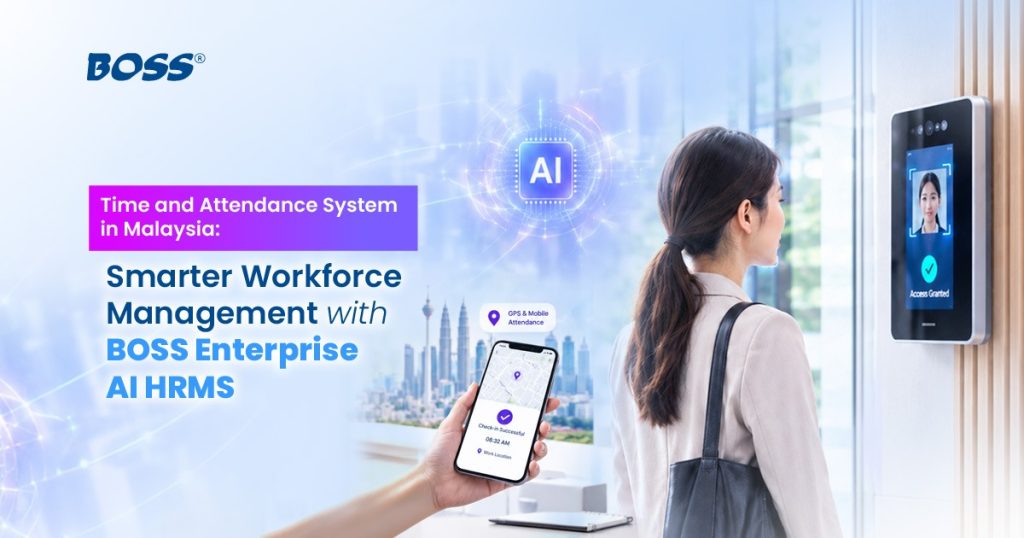
BOSS Enterprise AI HRMS provides an integrated time and attendance management solution that supports biometric devices, facial recognition, mobile attendance, QR code scanning, GPS tracking, flexible shift scheduling and automated overtime calculations. By connecting attendance records with HR and payroll processes, organisations can streamline workforce management through a centralised platform.
What Is a Time and Attendance System?
A time and attendance system is software that records, monitors and manages employees’ working hours, clock-in and clock-out times, attendance status, shift schedules and overtime. Unlike manual attendance records, an automated attendance management system captures employee time data digitally, helping HR teams and managers reduce manual data entry and simplify attendance administration.
A modern employee attendance management system may include:
- Automated clock-in and clock-out recording.
- Biometric and facial recognition verification.
- Mobile attendance with GPS tracking.
- QR code attendance for convenient check-ins.
- Employee shift scheduling and roster management.
- Overtime calculation based on configured company policies.
- Missed clock-in and clock-out management.
- Attendance reporting and payroll integration.
For organisations with multiple departments, branches or work locations, these capabilities provide better visibility into workforce attendance and help managers respond to operational requirements.
Why Do Businesses Need an Automated Time and Attendance System?
Traditional attendance management can become increasingly complicated as a company expands. Manual records, inconsistent clock-in practices and separate attendance and payroll systems can increase the administrative workload for HR teams.
1. Reduce Manual Errors and Attendance Discrepancies
Manual timesheets and spreadsheets depend on accurate data entry and consistent record-keeping. Mistakes in working hours, missing clock-ins or incorrect overtime entries can create discrepancies that require additional investigation. An automated attendance tracking system records employee time data digitally, making it easier to review attendance records, identify missing entries and reduce reliance on manual calculations.
2. Improve Attendance Accountability
Inaccurate clock-ins and buddy punching, where one employee records attendance on behalf of another, can undermine the reliability of attendance records. Depending on the verification method used, biometric devices and facial recognition can help verify employee identity. GPS tracking and photo validation can provide additional checks for organisations with mobile or field-based employees. These controls help organisations establish more reliable attendance records and encourage greater accountability.
3. Simplify Shift Scheduling and Workforce Planning
Businesses in manufacturing, retail, healthcare and hospitality often operate with different shifts, rotating schedules and varying staffing requirements. Managing these arrangements manually can be time-consuming, especially when employees work across different departments or locations. A workforce attendance management system helps organisations assign and manage shift schedules, monitor attendance against planned rosters and coordinate staffing requirements more effectively.
4. Improve Overtime and Payroll Accuracy
Incorrect working-hour records can lead to overtime discrepancies, payroll adjustments and employee disputes. An integrated attendance and payroll system can use recorded attendance data and configured overtime rules to streamline overtime calculations and payroll preparation. This reduces duplicate data entry and helps HR teams review payroll-related information more efficiently.
5. Gain Better Workforce Visibility
Managers need timely information about employee attendance to respond to late arrivals, unexpected absences and staffing shortages. Digital attendance records and centralised reporting help HR teams and supervisors review workforce attendance more efficiently, identify recurring attendance issues and make better-informed operational decisions.
How Does AI Improve Time and Attendance Management?
AI-powered workforce management can help organisations analyse attendance patterns, identify unusual records and support more informed decisions. However, not every automated attendance function is an AI feature; some capabilities rely on conventional rules, biometric verification or location technology. Depending on the system’s actual capabilities, AI may support attendance anomaly detection, pattern analysis and workforce insights, while automated rules handle routine timekeeping calculations.
Common technologies and capabilities associated with modern attendance management include:
Biometric and facial recognition: Helps verify employee identity during clock-in and clock-out, depending on the device and verification method.
GPS and location-based attendance: Supports attendance recording for authorised field, remote or multi-location work arrangements.
Attendance anomaly monitoring: Configured rules or AI-based analytics can flag unusual working-hour patterns, missing punches or attendance discrepancies for review
Automated shift and overtime processing: Applies configured schedules and overtime policies to recorded working hours, reducing repetitive manual calculations.
Integrated workforce reporting: Consolidates attendance information to help HR teams and managers review patterns and staffing requirements.
When implemented appropriately, these capabilities can improve the reliability of attendance data and help HR teams focus on exceptions that require attention rather than repetitive administrative tasks.
BOSS Enterprise AI HRMS: An Integrated Time and Attendance System in Malaysia
BOSS Enterprise AI HRMS helps organisations manage employee attendance, work schedules and overtime through an integrated HR management platform. It supports different attendance recording methods and configurable workforce management processes to accommodate varying operational needs.
1. Flexible Attendance Tracking Options
Every workforce has different attendance requirements. Office employees, production workers, retail staff and field teams may need different ways to record their working hours. BOSS Enterprise AI HRMS supports multiple attendance tracking options, including:
Biometric attendance: Integration with compatible third-party fingerprint, facial recognition and card-reader devices.
Mobile attendance: Employees can clock in and out through the mobile application.
QR code attendance: Employees can scan QR codes to record attendance.
GPS tracking: Location information supports attendance verification for field-based or multi-location employees.
Photo validation: Employees can upload a photo during clock-in for visual confirmation.
These options allow organisations to select attendance methods that suit their workforce, work locations and verification requirements.
2. Flexible Multi-Location Shift Management
Managing different shifts across departments, branches and operational sites requires clear scheduling and coordination. BOSS Enterprise AI HRMS enables organisations to assign different shift patterns to employee groups based on department or location. Employees can also view, edit and submit shift preferences for approval through the mobile application. This helps HR teams and supervisors coordinate schedules, manage shift preferences and improve visibility over workforce planning.
3. Automated Overtime Calculations
Calculating overtime manually can be challenging when employees follow different shifts and overtime policies. BOSS Enterprise AI HRMS supports automated overtime calculations based on employee-specific shifts and configured organisational overtime rules. Calculated overtime information can be integrated with payroll to streamline payroll preparation and reduce repetitive data handling.
The result is a more structured approach to reviewing working hours, overtime eligibility and payroll-related attendance data.
4. Automated Management of Missed Attendance Entries
Missed clock-ins and clock-outs can create incomplete attendance records and require HR teams to investigate and make corrections. BOSS Enterprise AI HRMS includes auto-correction functionality for missed attendance entries, helping reduce manual correction work and maintain more complete attendance records. Organisations should configure and review correction rules according to their internal approval procedures to ensure that attendance records remain accurate and accountable.
5. Mobile Attendance for Field and Distributed Teams
Employees who travel between sites or work outside a central office need convenient ways to record their attendance.
BOSS Enterprise AI HRMS supports mobile attendance through QR code scanning, GPS tracking and photo uploads. Attendance data syncs with the system in real time, giving managers timely access to updated records. This is particularly useful for businesses managing field personnel, distributed teams and employees working across multiple locations.
6. Integration with Biometric Attendance Devices
Organisations that already use attendance hardware may want to retain their existing devices while improving their HR processes. BOSS Enterprise AI HRMS supports integration with compatible third-party biometric attendance devices, including fingerprint readers, facial recognition devices and card readers. By connecting attendance devices with HRMS workflows, organisations can streamline attendance administration and reduce the need to manage disconnected records.
7. Automated Mileage Calculation with Google Maps
For employees who travel for work, calculating business mileage manually can take additional time and introduce calculation errors. BOSS Enterprise AI HRMS supports Google Maps-based mileage calculation upon customer request. Users can enter a starting point and destination to calculate travel distance and support mileage reimbursement calculations. This feature is subject to additional usage charges and can help simplify mileage-related administration for eligible customers.
How Does an Integrated Attendance System Improve Payroll Management?
Attendance and payroll are closely connected. Working hours, overtime, shift arrangements and approved leave can all affect payroll preparation. When attendance and payroll operate in separate systems, HR teams may need to export files, reconcile records and re-enter information manually. This increases the administrative workload and creates opportunities for data discrepancies. With BOSS Enterprise AI HRMS, attendance management and payroll processes are connected within an integrated HRMS environment.
This helps organisations:
- Consolidate attendance and working-hour information.
- Streamline overtime calculations using configured rules.
- Reduce duplicate data entry between attendance and payroll processes.
- Simplify attendance reviews before payroll processing.
- Improve access to employee attendance records and reports.
For Malaysian businesses, an integrated approach can help HR teams manage attendance and payroll-related information more systematically. Employers should still verify that their configured payroll rules, overtime calculations and record-keeping practices meet applicable Malaysian employment requirements.
Which Industries Benefit from a Time and Attendance System?
An automated attendance management system can benefit organisations across industries, particularly those with shift-based, multi-location or mobile workforces.
Manufacturing
Manufacturing companies often manage production shifts, rotating rosters, overtime and large employee populations. Automated attendance tracking helps HR teams monitor working hours, coordinate shift schedules and prepare attendance information for payroll.
Retail
Retail businesses with multiple outlets need visibility into employee attendance across different locations. Mobile attendance, QR code check-ins and centralised records can support more consistent attendance management across branches.
Healthcare and Hospitality
Hospitals, clinics, hotels and hospitality businesses often require employees to work different shifts. Flexible scheduling and reliable attendance records help managers coordinate staffing and monitor working hours.
Field Services and Distributed Operations
Employees who travel between customer sites, project locations or other work locations need flexible attendance recording methods. GPS-enabled mobile attendance and photo validation can support location-based attendance processes.
Large Enterprises
Organisations with multiple departments, facilities and employee groups can benefit from centralised attendance management, configurable shift rules and integrated payroll workflows.
What Should You Look for When Choosing the Best Time and Attendance System in Malaysia?
Choosing the right attendance software depends on your company’s workforce size, operational structure and HR requirements. Before selecting a solution, evaluate these essential capabilities:
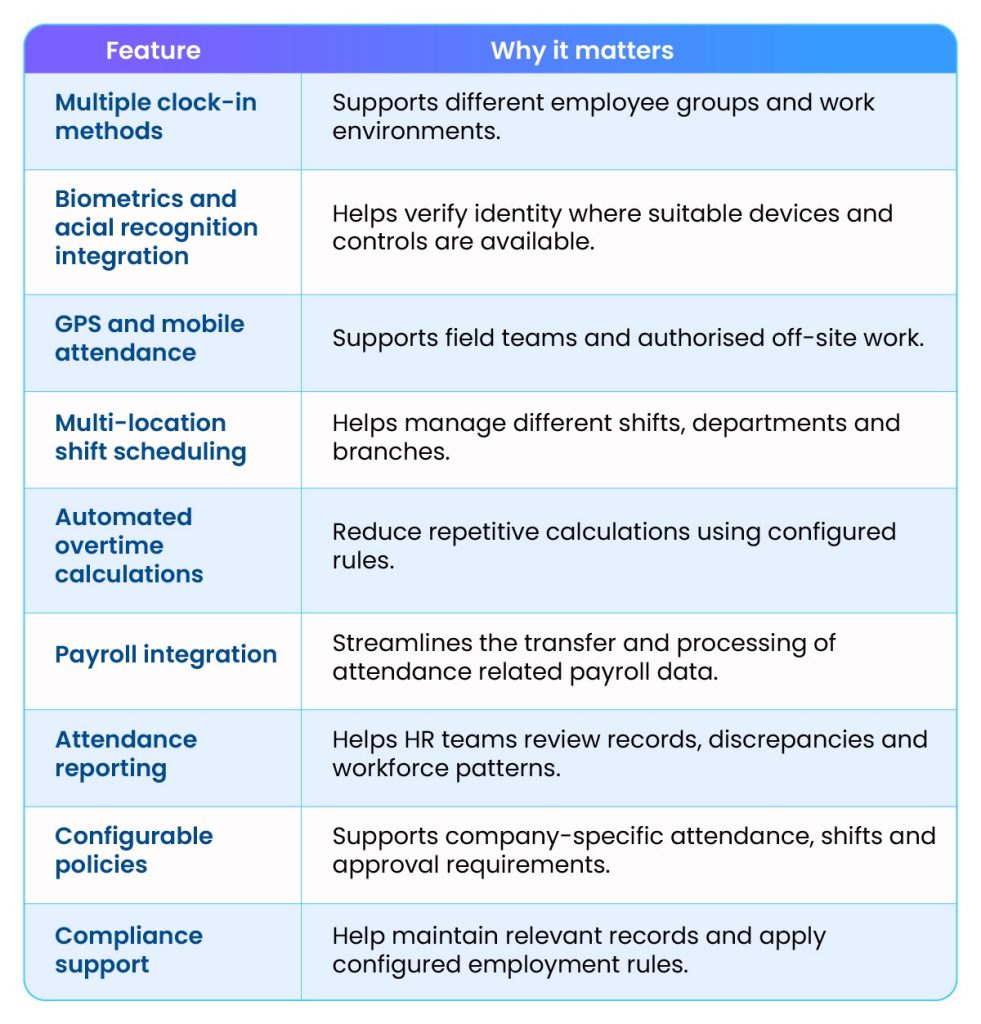
For Malaysian organisations, it is also important to assess local payroll requirements, system compatibility, implementation support, data security and the vendor’s experience with your industry. BOSS Enterprise AI HRMS brings attendance tracking, shift management, overtime processing and payroll-related workflows together in one HRMS platform, making it a solution worth evaluating for businesses seeking more structured workforce management.
Frequently Asked Questions About Time and Attendance Systems
What is the best time and attendance system in Malaysia?
The best time and attendance system depends on your workforce size, industry, attendance methods, shift complexity and payroll requirements. Businesses should compare biometric integration, mobile attendance, GPS tracking, shift scheduling, overtime calculations, reporting and HRMS integration before deciding. BOSS Enterprise AI HRMS is an option for Malaysian organisations looking to manage attendance, shifts and overtime within an integrated HR and payroll environment.
What is the difference between an attendance system and an HRMS?
An attendance system focuses on recording and managing employee working hours, clock-ins, clock-outs and attendance records. An HRMS covers broader HR processes and may integrate attendance with payroll, leave management, employee records and other HR functions. An integrated HRMS helps organisations manage connected HR processes without relying as heavily on separate systems.
Can a time and attendance system integrate with payroll?
Yes. An integrated system can transfer attendance data and calculated overtime information into payroll workflows, reducing manual data entry and simplifying payroll preparation. BOSS Enterprise AI HRMS supports the integration of attendance information and overtime calculations with payroll processes.
Can employee clock in using their mobile phones?
Yes. Mobile attendance systems can allow employees to record attendance through an application, depending on the available features and company configuration. BOSS Enterprise AI HRMS supports mobile clock-ins and clock-outs, QR code scanning, GPS tracking and photo uploads.
How does GPS attendance tracking work?
GPS-enabled attendance uses location information from a compatible device to support verification of an employee’s check-in location. Depending on the system configuration, businesses may use location data to help manage field employees or attendance across multiple work sites. Employers should establish clear policies for location-data collection, employee privacy and appropriate access to attendance records.
Can an attendance system manage different shifts and overtime rules?
Yes. Workforce attendance software can support multiple shift patterns and overtime calculations based on configured rules. BOSS Enterprise AI HRMS supports shift assignment by employee group, department or location, as well as overtime calculations based on employee-specific shifts and organisational policies.
Does an AI-powered attendance system prevent buddy punching?
Biometric verification and facial recognition can help reduce buddy punching by checking the identity of the person clocking in. GPS tracking and photo validation may provide additional verification for mobile attendance. The effectiveness of these controls depends on the technologies implemented, system configuration and organisational procedures. No single method should be assumed to eliminate every form of attendance fraud.
Is a time and attendance system suitable for manufacturing companies?
Yes. Manufacturing companies can use attendance software to manage production shifts, employee clock-ins, overtime and attendance records across operational locations. Integration with payroll can further streamline the preparation of working-hour information for payroll processing.
Is BOSS Enterprise AI HRMS suitable for companies with multiple locations?
BOSS Enterprise AI HRMS supports flexible shift management by department or location and offers multiple attendance recording methods, including mobile attendance, QR code scanning, GPS tracking and compatible biometric devices. These capabilities can support organisations managing employees across different work locations.
Streamline Workforce Attendance with BOSS Enterprise AI HRMS
Accurate attendance records are essential for effective workforce management, reliable payroll preparation and operational efficiency. By replacing fragmented attendance processes with digital tracking, flexible shift scheduling and integrated payroll workflows, businesses can improve visibility over employee working hours while reducing administrative effort.
BOSS Enterprise AI HRMS combines multiple attendance recording methods, shift management, automated overtime calculations and payroll integration within a comprehensive HR management platform.
Whether your organisation manages manufacturing shifts, retail outlets, office employees or field-based teams, a well-configured time and attendance system can help establish more consistent workforce processes.
Looking for a time and attendance system in Malaysia? Explore BOSS Enterprise AI HRMS to discover how integrated attendance and payroll management can support your organisation’s workforce requirements.
Contact us discuss your organisation’s time and attendance management needs.