
In today’s highly competitive business environment, organizations can no longer rely on intuition or outdated evaluation methods to drive employee performance. Sustained growth requires a structured, data-driven approach that aligns workforce capabilities with organizational goals. This is why performance management has become an essential strategic function for companies striving for efficiency, productivity, and long-term success.
A modern performance management framework ensures that employees stay focused, engaged, and continuously improving. Below, we explore the six key reasons why performance management is important—and how the right HR technology can transform the entire process.
1. Build More Effective and Data-Driven Goals
Organizations understand the importance of SMART goals, but many struggle to set realistic, measurable objectives. A strong performance management system uses both real-time and historical data to guide goal-setting.
Managers can assess employee progress, evaluate performance patterns, and create future goals based on actual metrics. This ensures goals are aligned with business strategies while being achievable for each individual.
New employees also benefit, as managers can benchmark performance based on similar roles and expected progression, resulting in fairer and more accurate expectations.
2. Improve Employee Productivity Across the Workforce
One of the most significant benefits of performance management is its positive impact on productivity. Defined goals, structured feedback, and continuous coaching keep employees motivated and on track.
Studies show that companies adopting continuous performance management practices experience up to 66% higher productivity. Clear visibility into expectations strengthens accountability, while employees gain a deeper understanding of how their work contributes to company objectives—driving stronger ownership and commitment.
3. Identify Training and Development Needs Early
According to Entrepreneur, 89% of employees want their employers to invest in their development.
Performance management provides ongoing insight into each employee’s strengths, competencies, and skill gaps.
With this information, HR teams can design targeted training programs that support career growth, address weaknesses, and prepare teams for evolving business needs. Investing in development not only builds a more capable workforce but also enhances organizational adaptability.
4. Increase Employee Engagement Through Continuous Communication
A modern performance management system promotes transparent, two-way communication between employees and managers.
Research highlights the importance of feedback:
- 72% of employees believe their performance would improve with corrective feedback.
- 40% of employees become disengaged when they receive little to no feedback.
Consistent performance discussions help employees feel valued and supported, improving collaboration, morale, and overall engagement.
5. Boost Retention, Satisfaction, and Talent Attraction
Companies with structured performance management processes attract talent 39% more effectively and retain employees 44% better than those without. Employees stay longer when they feel supported, recognized, and given opportunities to grow. When team members understand how their roles contribute to organizational success, job satisfaction increases—creating a more connected, motivated, and loyal workforce.
6. Recognize and Reward High Performers
Performance management enhances an organization’s ability to spot top performers—not just during annual reviews but throughout the work cycle.
Managers can reward employees for:
- Consistent performance
- Innovative ideas
- Strong teamwork
- Effective time management
- Problem-solving
Regular recognition boosts morale, reinforces positive behavior, and inspires others to elevate their performance.
What Is Performance Management?
Performance management is the continuous cycle of reviewing, evaluating, and improving employee performance. Unlike traditional annual appraisals, it focuses on ongoing communication, improvement, and alignment with both short-term and long-term company objectives.
A strong performance management process involves:
- Clear planning and role definition
- SMART goal-setting
- Regular monitoring and assessment
- Constructive feedback
- Employee development and coaching
- Engagement activities
- Recognition and rewards
- Data-driven recalibration
Together, these elements foster a high-performance culture across the organization.
Transform Your Performance Management with BOSS Enterprise HRMS
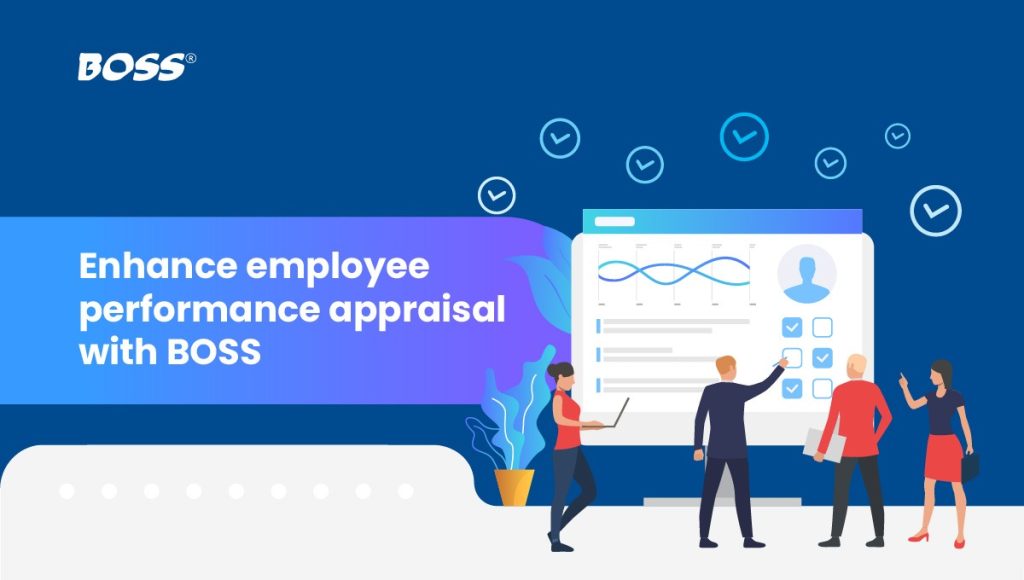
Understanding the importance of performance management is only the first step. Businesses need the right tools to execute it effectively. BOSS Enterprise HRMS offers a fully integrated, real-time performance management module designed to streamline evaluations, automate workflows, and empower both managers and employees with actionable insights.
With powerful dashboards, competency-based assessments, SMART goal tracking, and continuous feedback features, organizations can build a performance culture that drives measurable results. Ready to elevate your performance management strategy?