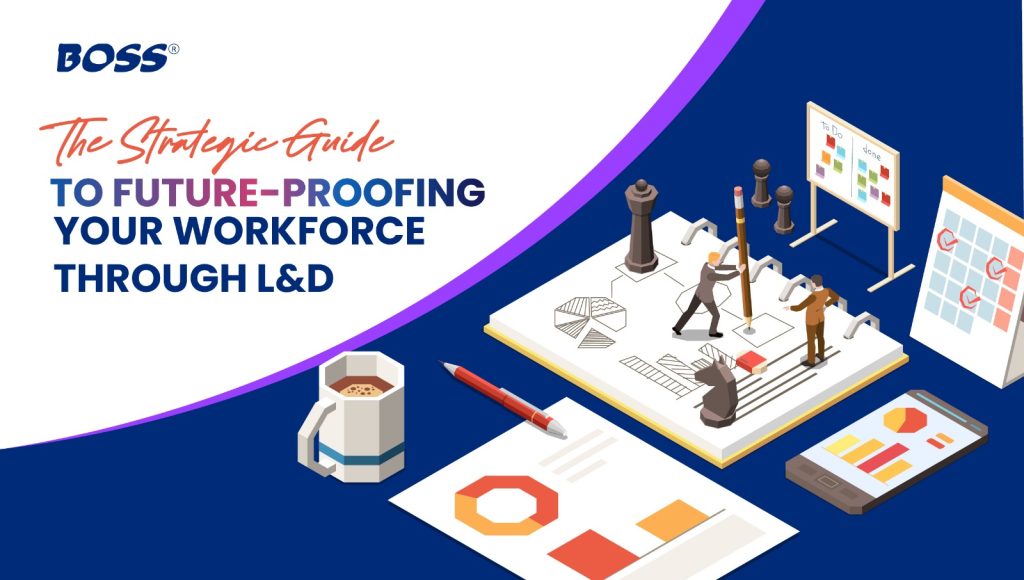

As business landscapes continue to transform at unprecedented speed, Learning & Development (L&D) has become a strategic pillar for organizational success. Companies are no longer treating training as a one-off initiative—leaders now recognize that sustainable growth depends on a skilled, adaptable, and future-ready workforce.
To help businesses stay ahead, here are the 9 key L&D priorities for 2026, and how organizations can align training investments with real business outcomes.
1. Business Alignment & Measurable Impact
Nearly half of executives believe their workforce lacks the skills required to deliver on business strategy. However, L&D teams often struggle to demonstrate clear ROI.
In 2026, successful L&D programs must:
- Align training with business goals and performance objectives
- Use defined metrics to measure behavior change and financial impact
- Address workforce risks and industry trends
- Communicate ROI clearly to leadership
Training must go beyond “completion rates”—it must deliver measurable contribution to organizational performance.
2. Human-Centric Leadership Development
Organizations that embrace human-centric leadership are 2.6× more likely to achieve their goals.
Instead of traditional command-and-control management, modern leaders must master:
- Empathy and emotional intelligence
- Coaching skills
- Purpose-driven communication
- Relationship building
In 2026, leadership success is measured not by authority, but by the ability to elevate people, inspire trust, and drive collective accountability.
3. Supporting the “Management Squeeze”
With only 37% of middle managers receiving proper training when promoted—and even fewer receiving ongoing development—managers are feeling the strain.
They are caught between:
- Senior leaders enforcing strategic initiatives
- Employees demanding flexibility, support, and clarity
Organizations must provide managers with:
- Practical leadership training
- Support for hybrid workforce management
- Skills to maintain motivation, communication, and engagement during constant change
4. Human + AI Collaboration Training
Only 14% of frontline employees have been trained on AI’s impact on their roles.
For AI implementation to succeed, employees need:
- Guidance on when to rely on AI vs. human judgment
- Ethical and responsible AI usage skills
- Confidence in working alongside automation
Building AI fluency is now a non-negotiable part of workforce development.
5. Upskilling for the Future of Work
Of the 56 core competencies needed for future workers:
- Only 20% are digital
- A significant 80% relate to cognitive, interpersonal, and self-leadership skills
This shift means organizations must:
- Move from role-based to skills-based training
- Prioritize creativity, critical thinking, collaboration, and adaptability
- Equip teams with skills that complement AI—not compete with it
A skills-centric workforce is more agile, resilient, and innovation-ready.
6. Personalized & Flexible Learning Experiences
With 90% of companies agreeing personalization improves continuous learning, flexible development will be essential.
AI-powered learning enables:
- Customized content tailored to individual needs
- Integrated training within everyday workflows
- Multiple modalities (microlearning, mobile learning, videos, coaching sessions)
- Faster knowledge absorption and real-time application
Personalized learning journeys empower employees to grow at their own pace without overwhelming their schedules.
7. Managing Generational Dynamics
By 2034, Millennials, Gen Z, and early Gen Alphas will make up 80% of the workforce in advanced economies.
To maximize intergenerational collaboration, companies must:
- Reduce age-based bias
- Encourage cross-generational mentoring
- Embrace diverse communication and work styles
- Foster a culture of belonging and respect
Organizations that leverage generational strengths will see more innovation, better problem-solving, and stronger teamwork.
8. Strengthening Workforce Resilience
With 72% of employees reporting organizational disruption in the past year, change resilience has become a top L&D priority.
To remain competitive, businesses need to focus on:
- Employee well-being and stress management
- Adaptability training
- Psychological safety
- Agility in shifting roles and responsibilities
Resilient employees strengthen organizational stability during transformation.
9. Building a Holistic Culture of Continuous Learning
The most successful organizations in 2026 will be those that:
- Embed training into daily operations
- Provide easily accessible development tools
- Encourage lifelong learning
- Link learning directly to performance outcomes
A culture of continuous learning ensures that employees—and the organization—can adapt to market shifts quickly and effectively.
Accelerate Your Learning & Development Strategy with BOSS Enterprise HRMS
BOSS Enterprise HRMS empowers organizations with an integrated Talent Management and Learning & Development ecosystem—designed to support training planning, competency mapping, personalized learning paths, and performance-driven development. Future-ready organizations invest in future-ready people.