
In today’s data-driven business environment, organizations are generating more workforce data than ever before. From recruitment and attendance records to employee performance, payroll, engagement surveys, and turnover statistics, every HR activity creates valuable information. However, collecting data alone is not enough. The real value lies in transforming that data into meaningful insights that support better decision-making.
This is where HR Analytics plays a critical role. Organizations that leverage HR analytics can move beyond intuition and assumptions, making workforce decisions based on facts, trends, and measurable outcomes. By connecting people data with business objectives, HR teams can become strategic partners in driving organizational performance and growth.
Why HR Data Matters
Every organization possesses a wealth of workforce information across multiple systems and departments. Yet many businesses struggle to fully utilize this data because it remains scattered across different platforms, spreadsheets, and reports.
When properly analyzed, HR data can help organizations answer important questions such as:
- Which recruitment channels produce the highest-quality hires?
- What factors contribute to employee turnover?
- Which departments experience the highest absenteeism rates?
- How effective are training and development programs?
- Are labor costs increasing faster than productivity?
- Which employee groups are most engaged and productive?
- Where are future leadership gaps likely to emerge?
The answers to these questions enable organizations to make proactive decisions rather than reacting to problems after they occur.
Understanding Key Sources of HR Data
Effective HR analytics begins with understanding where workforce data originates.
- HR System Data
The Human Resource Management System (HRMS) serves as the primary source of employee information. This includes recruitment records, employee demographics, attendance data, leave records, payroll information, performance evaluations, compensation details, learning and development activities, succession planning, and employee exits. For example, attendance data can reveal absenteeism trends, while performance records can identify high-performing employees and future leaders. Payroll and compensation information can help organizations monitor labor costs and ensure equitable pay practices. - Employee Feedback and Survey Data
Employee surveys, engagement assessments, wellness programs, and mentoring initiatives provide valuable insights into employee sentiment and workplace culture. These data sources help HR teams understand employee satisfaction levels, identify potential retention risks, and evaluate the effectiveness of workplace initiatives. - Business Data
HR decisions do not exist in isolation. Connecting workforce data with business data creates a more complete picture of organizational performance. Financial data can help assess labor costs and return on investment for HR initiatives. Sales data can reveal how employee performance impacts revenue generation. Operational and production data can demonstrate the relationship between workforce management and productivity. - External Market Data
External data sources such as salary benchmarks, labor market reports, industry studies, and government statistics help organizations remain competitive and compliant. Understanding market trends allows businesses to make informed decisions regarding compensation, talent acquisition, workforce planning, and employee retention.
Turning Data into Actionable Insights
While organizations may have access to large volumes of workforce data, the challenge often lies in converting information into meaningful insights. Raw data stored in multiple systems can be difficult to interpret without the right tools. HR leaders need a way to consolidate information, identify trends, visualize performance indicators, and generate reports quickly. This is where HR analytics platforms become essential. By centralizing workforce data and presenting it through intuitive dashboards and reports, organizations can gain real-time visibility into their workforce and make informed decisions with confidence.
How BOSS HR Analytics Supports Data-Driven HR Management
BOSS HR Analytics is designed to help organizations transform workforce data into actionable business intelligence. Rather than spending hours compiling reports manually, HR teams can access meaningful insights through an integrated analytics platform that simplifies data analysis and reporting.
Visualize Data with Drag-and-Drop Simplicity
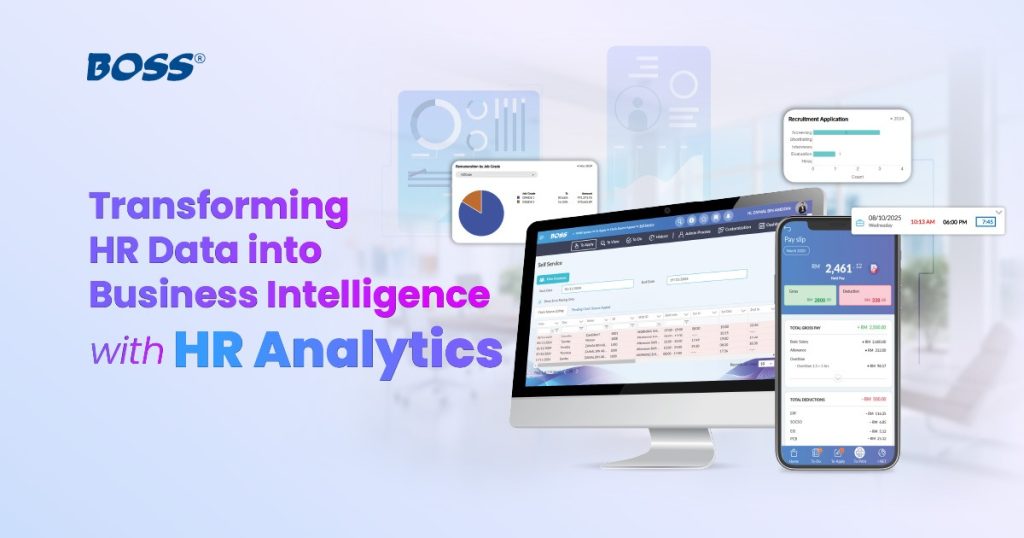
Creating workforce reports should not require advanced technical expertise. With BOSS HR Analytics, users can easily generate charts, graphs, and visual reports using intuitive drag-and-drop functionality. This allows HR professionals and management teams to quickly analyze workforce trends without relying on complex spreadsheets.
Export Reports for Deeper Analysis
Organizations often require customized reports for management reviews, audits, strategic planning, and board presentations. BOSS HR Analytics allows users to seamlessly export charts and reports into Microsoft Excel, making it easier to perform further analysis and share insights across departments.
Drill Down with Advanced Filtering
Every organization has unique reporting requirements. The advanced filtering capabilities within BOSS HR Analytics allow users to analyze specific departments, locations, employee groups, job grades, or time periods. This flexibility enables more targeted analysis and helps uncover meaningful trends that may otherwise remain hidden.
Gain Instant Visibility Through Analytics Dashboards
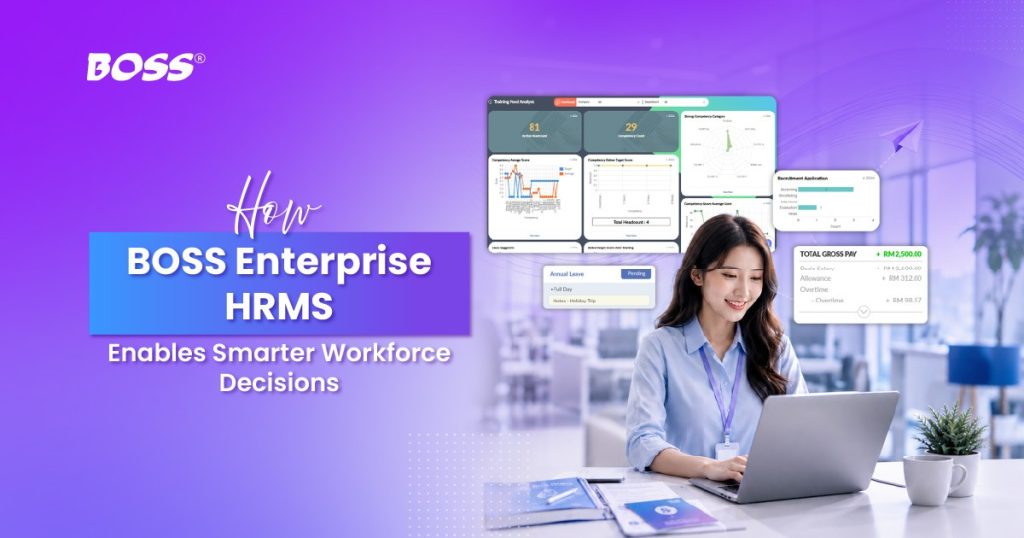
Decision-makers need timely access to information. BOSS HR Analytics consolidates workforce metrics into an integrated dashboard that provides a comprehensive overview of key HR indicators. This allows management teams to monitor workforce performance, labor costs, attendance trends, employee turnover, recruitment effectiveness, and other critical metrics from a single view.
The Strategic Value of HR Analytics
As organizations continue to navigate talent shortages, rising labor costs, changing workforce expectations, and increasing compliance requirements, the ability to make informed workforce decisions has become a competitive advantage.
HR analytics empowers organizations to:
- Improve workforce planning
- Enhance recruitment effectiveness
- Reduce employee turnover
- Optimize labor costs
- Increase employee engagement
- Strengthen leadership development
- Improve productivity
- Support compliance and risk management
Most importantly, HR analytics helps transform HR from an administrative function into a strategic business partner that contributes directly to organizational success.
The future of HR is increasingly driven by data. Organizations that can effectively collect, analyze, and act upon workforce information are better positioned to make informed decisions, improve employee experiences, and achieve sustainable business growth.
With BOSS HR Analytics, businesses can unlock the full value of their workforce data through powerful visualization tools, advanced filtering capabilities, comprehensive dashboards, and seamless reporting functions. By turning data into actionable insights, organizations can build stronger workforce strategies and make smarter decisions for the future.